Dementia and Frequent Falls: Which Setting Can Manage Both?
A parent with dementia who also falls repeatedly has two overlapping risks.
The dementia may affect judgment, memory, navigation, and willingness to wait for help. At the same time, weakness, balance problems, medications, blood-pressure changes, vision, footwear, pain, or other medical conditions may increase the physical risk of falling.
The right care setting has to manage both problems at once. A secure memory-care environment is not enough if staff cannot provide the mobility help your parent needs, and a physically capable setting is not enough if it cannot manage dementia-related supervision.
Dementia can increase fall risk
The National Institute on Aging notes that mild cognitive impairment and some dementias increase fall risk.
Dementia can contribute when a person:
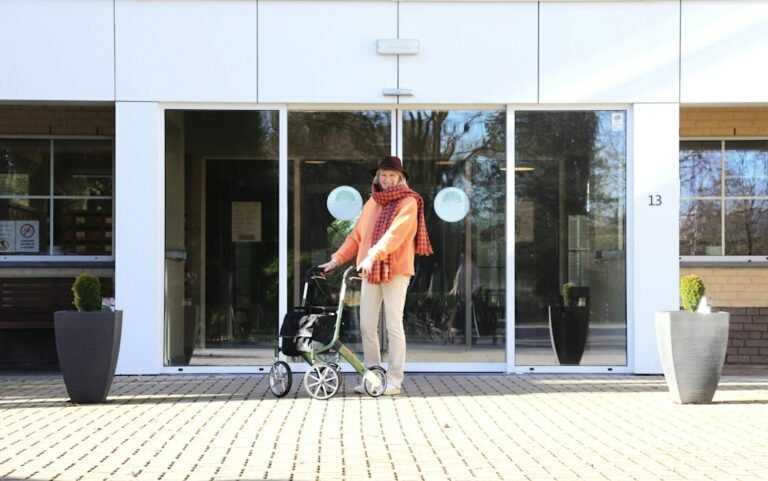
- forgets to use a walker;
- stands without waiting for help;
- cannot remember transfer instructions;
- becomes disoriented at night;
- misjudges steps;
- rushes to the bathroom;
- cannot recognize hazards;
- wanders; or
- cannot reliably use a call button.
That does not mean every fall is caused by dementia.
Recurrent falls still need a medical and functional assessment
CDC’s STEADI framework emphasizes screening, assessing risk factors, and intervening on modifiable causes.
Ask the clinical team to review:
- medications;
- dizziness;
- blood pressure when standing;
- vision;
- hearing;
- gait;
- balance;
- leg strength;
- feet and footwear;
- pain;
- continence and bathroom urgency;
- assistive devices;
- environmental hazards; and
- medical conditions that affect mobility.
Our broader guide After a Third Fall, What Should a Family Ask Before Choosing Care? covers the general fall assessment.
This article focuses on the added dementia-care dimension.
Write down what happens before each fall
A useful fall history includes:
- time;
- location;
- activity;
- whether the person was alone;
- whether a walker was available;
- whether staff had told the person to wait;
- toileting urgency;
- dizziness;
- medication timing;
- nighttime confusion;
- injury; and
- what assistance was needed afterward.
A pattern of standing impulsively without help may require a different plan from fainting after blood-pressure medication.
Ask whether the person can remember safety instructions
A care plan that relies on memory may fail as dementia progresses.
Examples include:
- “Press the call button before standing.”
- “Use the walker every time.”
- “Wait for staff before going to the bathroom.”
- “Do not use the stairs.”
Ask whether your parent can consistently retain those instructions.
If not, the environment and staffing need to compensate.
Call buttons may not solve the problem
A resident may have a call system and still fall because they:
- forget what the button is for;
- cannot locate it;
- stand before pressing it;
- press it but forget to wait; or
- cannot communicate what they need.
Ask the facility how staff identify residents who cannot use call systems reliably.
Our article Call Bell Response Time: How to Ask Nursing Homes About Help explains the broader response-time questions.
Assisted living can fit some people with dementia and falls
Assisted living may remain appropriate when:
- dementia is mild or moderate;
- the person can follow enough safety instructions;
- transfers are within the community’s capability;
- staff can provide the needed supervision;
- the building supports safe mobility; and
- medical needs do not exceed the license or staffing model.
Ask exactly how much mobility help is included.
“Fall risk” is too vague.
Memory care may help when cognitive supervision is the main gap
Memory care can be useful when dementia drives:
- unsafe wandering;
- exit-seeking;
- nighttime disorientation;
- poor hazard awareness;
- inability to remember routines; or
- repeated unsafe attempts to stand or walk.
But ask the memory-care unit:
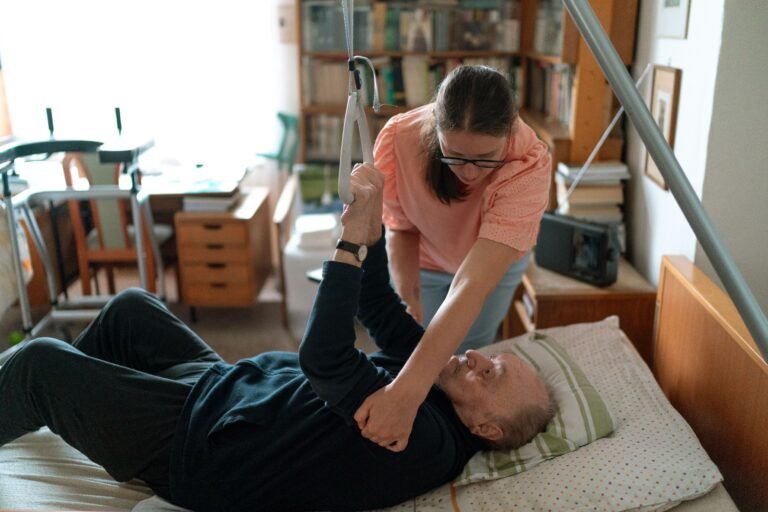
- Can staff provide one-person transfer help?
- Two-person transfer help?
- Wheelchair assistance?
- Toileting every few hours?
- Overnight checks?
- Mechanical-lift transfers?
- Physical therapy access?
Some memory-care programs are designed primarily for ambulatory residents.
Nursing-home care may fit when physical assistance is extensive
A nursing home may be a better fit when the person has dementia plus needs such as:
- two-person transfers;
- mechanical lift;
- frequent repositioning;
- severe weakness;
- complex wounds;
- swallowing problems;
- substantial incontinence care;
- frequent nursing assessment; or
- another high physical-care need.
Our guide When a Parent Needs Two People to Stand explains why transfer frequency and staffing matter.
Ask about overnight risk
Falls often happen at night.
Ask:
- How many staff are present on the unit overnight?
- Who helps with toileting?
- Are scheduled rounds used?
- How are high-risk residents identified?
- What happens if the resident repeatedly gets up?
- Can staff provide the required transfer assistance at 2 a.m.?
- Are hallways and bathrooms well lit without being overstimulating?
Dementia-related sleep disruption may make nighttime staffing more important than daytime staffing.
Environment matters
Look for:
- clutter-free pathways;
- stable flooring;
- contrasting surfaces where helpful;
- handrails;
- accessible bathrooms;
- supportive seating;
- appropriate bed height;
- space for walkers or wheelchairs;
- good lighting;
- safe outdoor walking space; and
- reduced confusing visual barriers.
A locked door alone is not a fall-prevention strategy.
Ask how the facility handles repeated attempts to stand
Some residents repeatedly rise because they:
- need the toilet;
- are in pain;
- are bored;
- are searching for someone;
- want to walk;
- are uncomfortable in the chair;
- are hungry or thirsty; or
- do not understand why they are being asked to sit.
A good plan looks for the need behind the movement.
Simply telling the resident to remain seated may not work.
Avoid making immobility the goal
Fear of falls can lead families to want staff to keep the resident in bed or chair.
Reduced movement can contribute to weakness and loss of function.
Fall prevention should balance:
- safe activity;
- strength and balance;
- appropriate supervision;
- transfer assistance;
- environmental changes; and
- individualized clinical recommendations.
Ask therapy and the care team what safe mobility should look like.
Ask what happens after each fall
No facility can guarantee zero falls.
Ask:
- Who evaluates the resident?
- When is the clinician notified?
- When is the family notified?
- Is injury assessed?
- Is the fall pattern reviewed?
- Are medications reconsidered when appropriate?
- Does therapy reassess mobility?
- Does the care plan change?
- Does staffing or toileting support change?
Repeated falls with no meaningful reassessment are a warning sign.
A practical example
Suppose Henry has moderate dementia and has fallen four times in two months.
He still walks with a walker, but he forgets it at night and tries to reach the bathroom alone.
His current assisted-living community can help during the day, but only one staff member covers his hallway overnight.
The family compares memory-care programs.
One has secured exits but expects residents to transfer independently.
Another can provide overnight toileting and one-person mobility assistance.
The second may be the better fit even if both buildings use the label “memory care.”
The choice comes from the combined cognitive and physical needs.
Ten questions for a facility tour
- What transfer assistance can you provide on every shift?
- What do you do when a resident cannot remember to call for help?
- How is overnight toileting handled?
- How are medications reviewed after repeated falls?
- Is PT or OT available when mobility changes?
- What dementia-specific training do staff receive?
- Can residents walk safely rather than being discouraged from moving?
- How do you respond after each fall?
- What mobility need would exceed this program’s capability?
- What dementia behavior would exceed this program’s capability?
The right setting must answer both sets of questions.
Sources and review date
Sources checked October 11, 2026. This article provides general care-planning information. Recurrent falls deserve individualized clinical assessment.
- National Institute on Aging: Falls and Fractures in Older Adults
- CDC: STEADI — Older Adult Fall Prevention
- CDC: Patient and Caregiver Fall-Prevention Resources
- Alzheimer’s Association: Wandering and Dementia