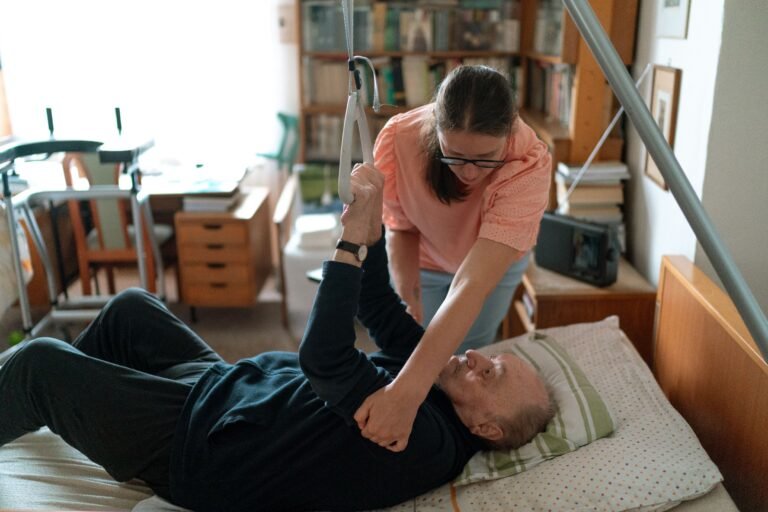
Palliative Care vs Hospice: What Senior-Living Families Should Know
Palliative care and hospice both focus on comfort and quality of life, but they are not the same thing.
Palliative care can begin during a serious illness while the person is still receiving disease-directed treatment. Hospice is a specific form of palliative care for people approaching the end of life who meet hospice eligibility requirements and choose comfort-focused care for the terminal illness.
Palliative care can start earlier
The National Institute on Aging describes palliative care as specialized care for people living with serious illness. It can focus on pain, shortness of breath, nausea, fatigue, anxiety, difficult treatment decisions, family stress, and coordination among clinicians.
It does not automatically mean someone is nearing death or that the family is “giving up.” Palliative care can occur alongside treatment intended to slow, control, or cure disease.
Hospice has additional eligibility and election rules
For Medicare hospice coverage, a physician must certify terminal illness with a life expectancy of six months or less if the illness runs its normal course, and the beneficiary must elect hospice rather than Medicare-covered treatment intended to cure the terminal illness and related conditions.
Hospice can continue beyond six months when eligibility is recertified. Interest in hospice does not by itself establish eligibility or predict an exact length of life.
Both can occur in senior-living settings
Depending on the service, clinical eligibility, facility capability, and local providers, palliative care or hospice may be provided in assisted living, memory care, nursing homes, hospitals, clinics, or private homes.
If hospice is being considered for someone who already lives in a nursing home, see Hospice in a Nursing Home: Who Provides What? for the separate responsibilities of the hospice team and the facility.
Start with the problem the family is trying to solve
Instead of choosing a label first, ask what symptoms or stressors need attention now. Palliative care may be useful when a resident has serious illness with frequent symptoms, repeated hospitalizations, difficult treatment decisions, complex medication burden, or changing goals.
Hospice may be appropriate when the illness is terminal, the person meets the applicable eligibility requirements, and the resident chooses care focused on comfort rather than cure of that illness.
Translate the label into an actual care plan
Ask what treatment continues, which symptoms the team will manage, who coordinates medication changes, what should trigger an after-hours call, and how decisions about hospital transfers will be made.
The resident’s own goals should remain central. A preference such as “I want fewer exhausting hospital trips, but I still want to sit outside with my family” can be more useful to the care team than arguing over terminology alone.
Coverage is different
Medicare has a defined hospice benefit. Palliative-care services outside hospice do not have one single universal Medicare benefit category, so coverage can depend on the clinician, service, location, and insurance.
Ask the palliative-care or hospice provider and the resident’s insurer to explain how visits, medications, equipment, and other services will be billed.
Ask how the teams coordinate
A resident may simultaneously have a primary-care clinician, senior-living staff, specialists, and a palliative-care or hospice team. Families should know who manages symptoms, medication changes, after-hours calls, hospital-transfer decisions, advance-care planning, and communication with the family.
A practical example
A resident with advanced heart failure wants to continue disease-directed treatment but has repeated breathlessness and hospitalizations. A palliative-care consultation may help manage symptoms and clarify goals while treatment continues.
Later, if the illness progresses and the resident meets hospice eligibility and chooses comfort-focused care, the plan may transition to hospice.
Eight questions to ask
- Are we adding palliative care or electing hospice?
- What symptoms or stressors are we trying to ease?
- Can disease-directed treatment continue?
- Does the person meet hospice eligibility?
- Which team manages difficult symptoms and medication changes?
- Who is available after hours?
- How will the senior-living community coordinate with the outside team?
- What services are covered, and what costs remain separate?
Frequently asked questions
Is palliative care only for the last days of life?
No. It may be provided earlier in a serious illness and alongside disease-directed treatment.
Can a person in assisted living or a nursing home receive hospice?
Often yes, depending on hospice eligibility, provider arrangements, facility capability, and payment rules. Confirm the exact arrangement for the resident and setting.
Sources and review date
Sources checked October 12, 2026.
- National Institute on Aging: What Are Palliative Care and Hospice Care?
- Medicare: Hospice Care Coverage