After a Third Fall, What Should a Family Ask Before Choosing Care?
A third fall can feel like the moment a family has to make a major decision.
But three is not a medical or legal threshold that automatically means assisted living or a nursing home. One serious fall can justify an urgent reassessment, while three minor falls can have very different causes and consequences.
What repeated falls do tell you is that the existing explanation and prevention plan need another look.
CDC notes that an older adult who falls once is more likely to fall again. The useful question after recurrent falls is not simply, “Where should Mom live now?” It is:
Why is she falling, what help does she need at the moment of risk, and which setting can reliably provide it?
Handle the immediate injury before the long-term care decision
After a fall, deal with the current medical situation first.
Seek emergency care for warning signs such as:
- loss of consciousness;
- new confusion;
- severe headache;
- inability to wake normally;
- new weakness or numbness;
- inability to speak, see, walk, or move normally;
- severe pain;
- heavy bleeding;
- obvious major injury; or
- other symptoms that suggest an emergency.
Head injuries deserve particular caution in older adults, especially when the person takes anticoagulants or other medicines that increase bleeding risk.
Do not let the family’s frustration with repeated falls make the current event seem routine.
Put all of the falls on one timeline
Families often remember “three falls” but not what happened immediately before each one.
Write down:
- date and time;
- location;
- what the person was trying to do;
- whether they felt dizzy;
- whether they tripped;
- footwear;
- lighting;
- assistive device use;
- whether they had just stood up;
- bathroom urgency;
- medication timing;
- alcohol use;
- injury;
- emergency care;
- what the clinician found; and
- what changed afterward.
Patterns may emerge.
Three falls on stairs point to a different problem than three episodes of faintness after standing. Falls while rushing to the toilet suggest a different intervention than falls caused by a walker that no longer fits.
Ask for a real fall-risk assessment
CDC’s STEADI approach is built around screening for fall risk, assessing modifiable risk factors, and intervening on those risks.
A useful clinical review may include:
- gait;
- balance;
- leg strength;
- medication review;
- dizziness;
- blood-pressure changes when standing;
- vision;
- feet and footwear;
- assistive devices;
- cognition;
- home hazards; and
- medical conditions that affect mobility or alertness.
The National Institute on Aging also notes that medications can increase fall risk by causing effects such as dizziness or confusion, and that environmental hazards can contribute.
The family should not be expected to diagnose the cause alone.
Review every medication, including “routine” ones
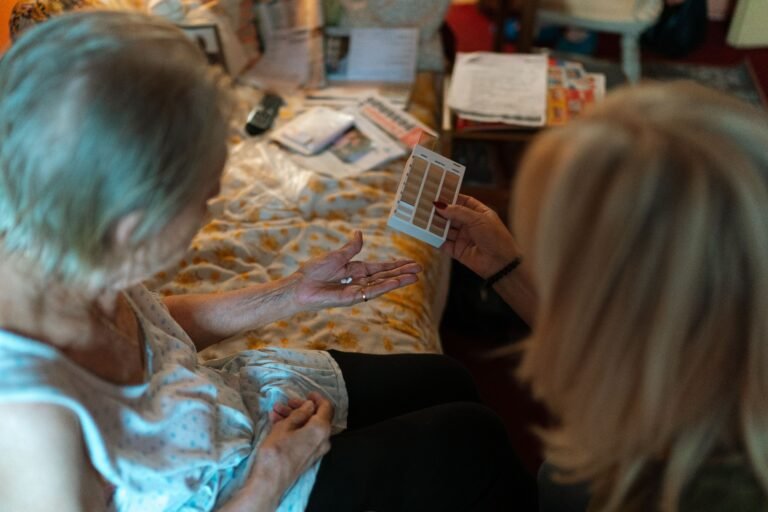
After recurrent falls, ask the clinician or pharmacist to review the complete medication list.
Pay attention to:
- new prescriptions;
- recent dose changes;
- sleep medicines;
- anxiety medicines;
- pain medicines;
- blood-pressure medicines;
- drugs that cause dizziness or sedation; and
- over-the-counter products and supplements.
Do not stop a prescribed medication on your own because you think it caused a fall.
Bring the timing of the falls to the medication review. “She fell twice within an hour of her morning medicines” is more useful than “Maybe it’s one of her pills.”
Ask about dizziness and blood pressure
A fall is not always a balance problem.
Some older adults become lightheaded when they stand. Others have heart rhythm problems, dehydration, illness, anemia, medication effects, or other medical issues that contribute to faintness or weakness.
Tell the clinician if the person reports:
- dizziness;
- blacking out;
- near-fainting;
- palpitations;
- chest discomfort;
- shortness of breath;
- sudden weakness; or
- falls with no clear trip or slip.
An unexplained fall can deserve more medical evaluation than a clearly witnessed trip over a rug.
Check vision, hearing, feet, and footwear
Small sensory and mobility problems can compound one another.
Ask whether the person:
- can see steps and edges clearly;
- has an up-to-date glasses prescription;
- hears instructions and alarms;
- has foot pain or numbness;
- wears shoes that fit;
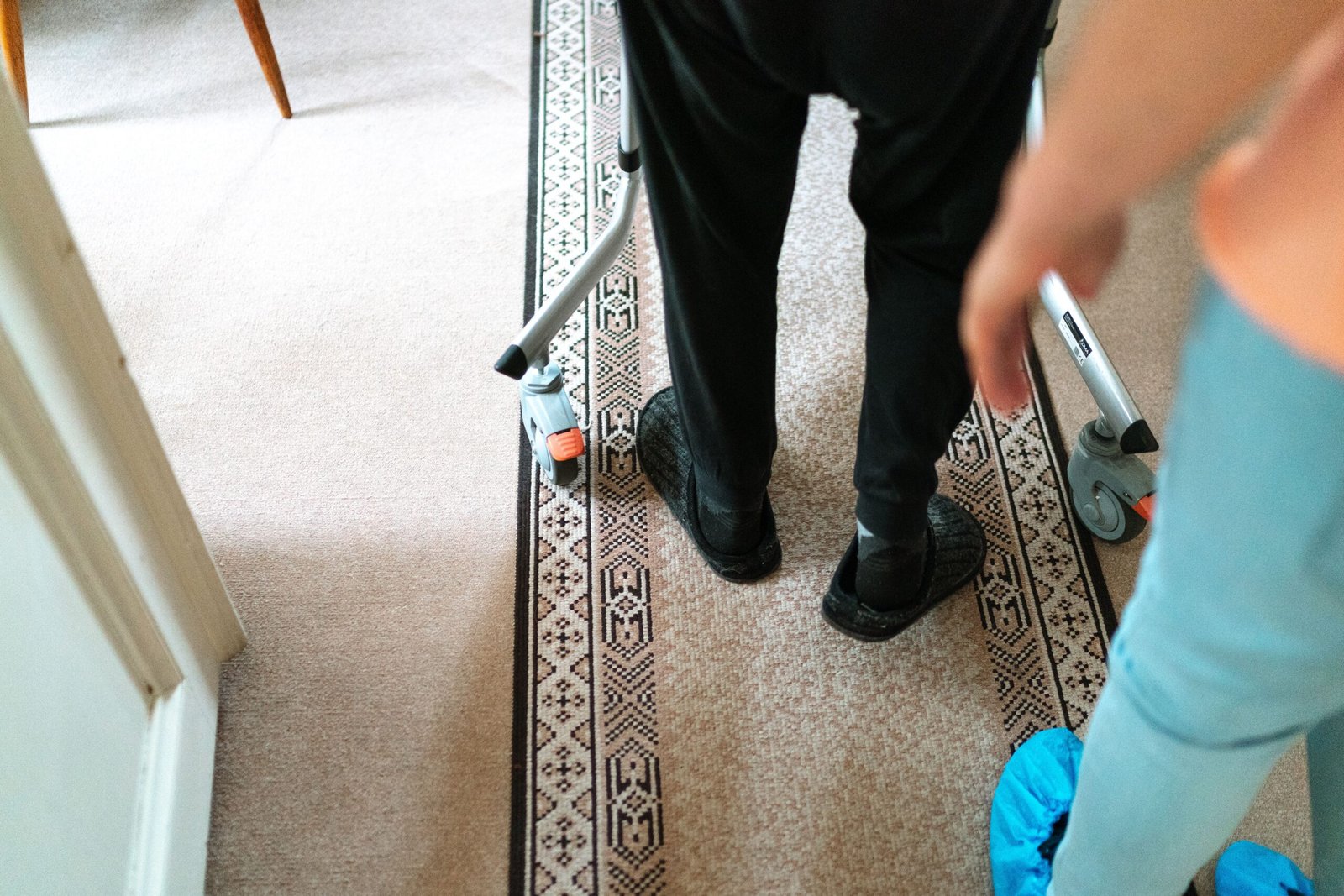
- walks in socks or loose slippers;
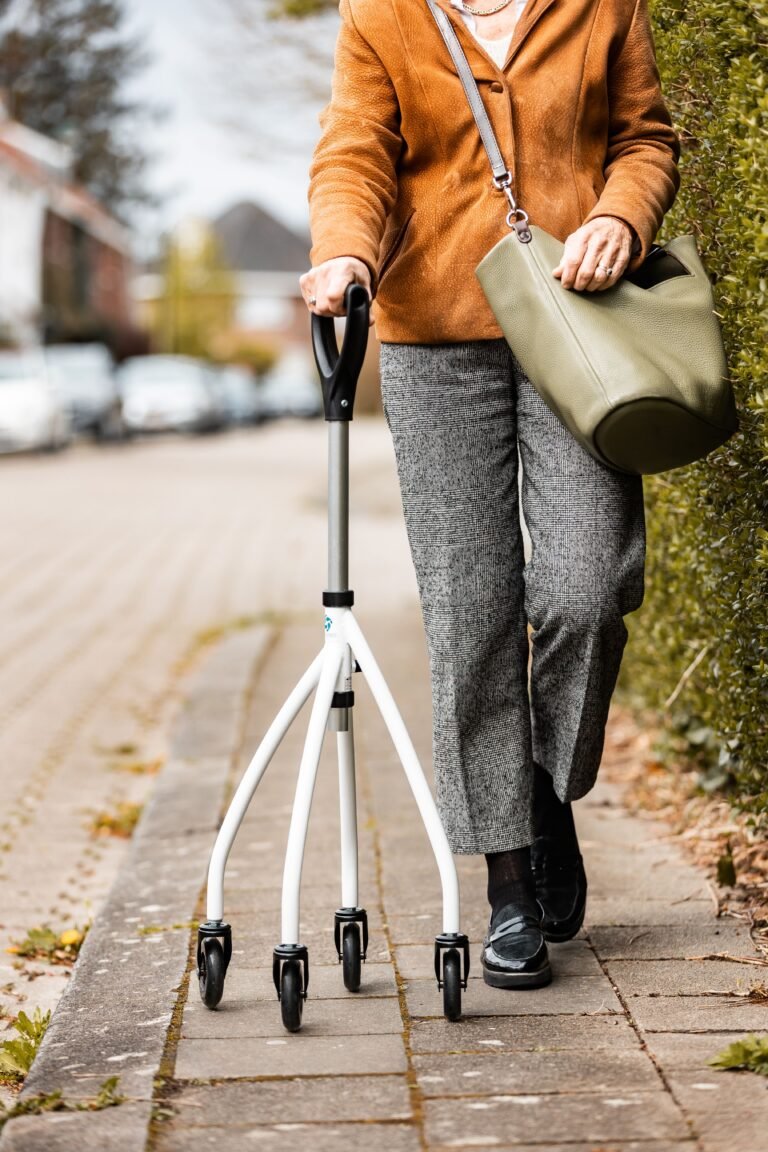
- has a cane or walker that is the right height; and
- actually uses the device every time it is needed.
NIA advises older adults with balance problems to use nonskid, rubber-soled, low-heeled shoes and to discuss balance problems with a clinician.
Walk the home from the person’s usual routes
A home can be familiar and still become unsafe as mobility changes.
Follow the actual routes your parent uses:
- bed to bathroom;
- bedroom to kitchen;
- favorite chair to front door;
- steps to the laundry;
- path to the mailbox; and
- route used at night.
Look for:
- loose rugs;
- cords;
- clutter;
- pets underfoot;
- dark hallways;
- missing handrails;
- uneven steps;
- slippery bathroom surfaces;
- low toilet height;
- furniture used for balance;
- long distances without a place to rest; and
- a walker that cannot fit through key spaces.
CDC and NIA both recommend home-safety changes as part of fall prevention.
A physical therapist, occupational therapist, nurse, or other qualified professional may be able to evaluate the home when clinically appropriate.
The bathroom deserves special attention
Bathrooms combine hard surfaces, water, tight spaces, transfers, and urgency.
CDC recommends measures such as grab bars around the tub, shower, and toilet and nonslip surfaces.
Ask:
- Can your parent safely get on and off the toilet?
- Can they step into the shower?
- Do they need a shower chair?
- Do they rush to the bathroom at night?
- Is the path well lit?
- Is incontinence creating urgency?
- Can they manage clothing fasteners while balancing?
- Is someone available if they need help?
If bathing has also become difficult, our article My Parent Has Stopped Bathing explains how to separate hygiene refusal from mobility and bathroom-safety problems.
Ask what help was needed after each fall
This question often reveals whether the current care setting still fits.
After the fall, could your parent:
- get up independently;
- crawl to a phone;
- use a medical-alert device;
- call family;
- describe what happened;
- bear weight;
- follow instructions; or
- remain safely alone afterward?
A person who falls occasionally but can summon help and has correctable risk factors has a different care problem from someone who repeatedly ends up on the floor for hours.
Do not assume a medical-alert button solves the underlying risk
Emergency-response technology can be valuable.
But it does not:
- prevent the fall;
- provide hands-on transfer assistance;
- ensure the person remembers to wear it;
- guarantee they can press it after a head injury;
- manage medications;
- escort the person to the bathroom; or
- replace supervision when cognition is impaired.
Treat alert devices as one layer of a plan, not the plan itself.
Option 1: make home safer and add targeted support
Remaining at home may still be reasonable when risks can be reduced and the needed help can be supplied reliably.
Potential supports include:
- home modifications;
- physical therapy;
- occupational therapy;
- strength and balance work recommended by clinicians;
- medication review;
- personal-care aides;
- scheduled check-ins;
- overnight care;
- toileting assistance; and
- meal and hydration support.
Our home care vs assisted living guide can help compare increasing support at home with moving.
Option 2: assisted living when falls are tied to daily-care gaps
Assisted living may be worth considering when falls occur because the person increasingly needs help with:
- dressing;
- toileting;
- bathing;
- medication;
- getting out of bed;
- transfers;
- nighttime supervision; or
- getting safely to meals and activities.
Ask the community exactly what it can provide.
A building can have grab bars and still be the wrong fit if staff cannot provide the transfer help your parent needs.
Use our assisted-living assessment guide to make sure the actual mobility needs are documented before move-in.
Ask about overnight conditions, not just daytime staffing
Falls often happen when the building is quiet and staffing is leaner.
Ask assisted-living or nursing-home providers:
- Who is physically in the building overnight?
- Who responds to a resident trying to get to the bathroom?
- How quickly can someone provide transfer help?
- What happens when two residents need assistance at once?
- How are falls documented?
- Who calls the family?
- Is the care plan reviewed after a fall?
- Can staffing increase if the resident’s needs increase?
Our article on assisted-living overnight staffing helps families ask those questions directly.
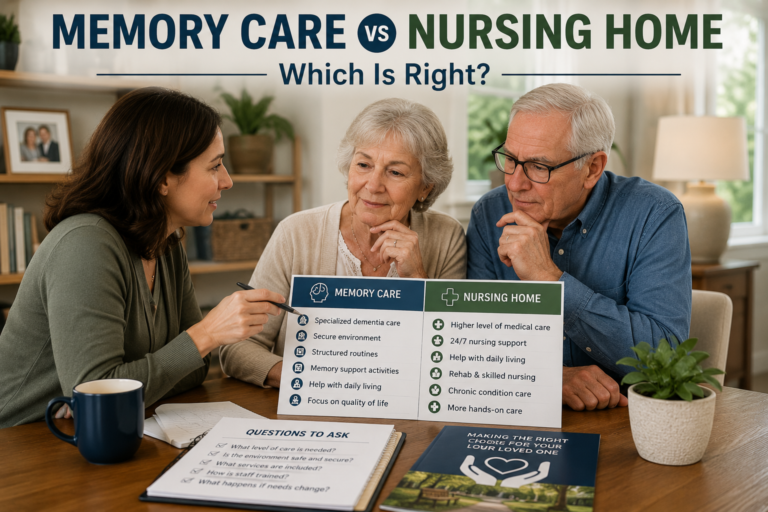
Memory care may fit when cognition drives the fall risk
Dementia can increase fall risk when a person:
- forgets to use a walker;
- gets lost at night;
- misjudges steps;
- wanders;
- cannot follow transfer instructions;
- repeatedly stands without help; or
- cannot reliably use a call system.
Memory care may be appropriate when the fall pattern is part of a broader dementia-support need.
But a dementia diagnosis does not explain every fall. Medication, illness, vision, pain, blood pressure, and environmental hazards still deserve evaluation.
Nursing-home care may fit when transfers and nursing needs become intensive
A nursing home may be more appropriate when repeated falls occur alongside high physical or clinical needs such as:
- two-person transfers;
- mechanical-lift needs;
- inability to bear weight;
- frequent nursing assessment;
- complex wounds;
- major swallowing problems;
- severe weakness;
- significant cognitive impairment plus extensive personal care; or
- another condition requiring a higher nursing level.
If your parent needs extensive assistance to stand, our future care decisions should focus on whether the setting can provide the required transfer safely every time—not on the label attached to the building.
When evaluating a facility, ask how it responds after a fall
No facility can promise that a resident will never fall.
A useful provider should be able to explain what happens after one.
Ask:
- Who evaluates the resident?
- When is the clinician notified?
- When is the family notified?
- How is injury assessed?
- Is the cause investigated?
- Does the care plan change?
- Are medications reviewed when appropriate?
- Is therapy consulted when appropriate?
- Are environmental changes made?
- How are repeated falls escalated?
Our fall-prevention tour checklist can help you compare providers without relying on a generic “fall-free” promise.
Do not use restraints as a simple fall-prevention solution
Trying to keep an older adult in one place can create its own harms and does not address the underlying cause of falls.
In Medicare- and Medicaid-certified nursing homes, residents have federal protections concerning restraints and the right to care that supports dignity and the highest practicable well-being.
Families should ask about safe mobility, supervision, transfer assistance, therapy, environment, and individualized care rather than asking a facility simply to “make sure she never gets up.”
A practical example
Suppose Barbara has fallen three times in two months.
The first happened when she tripped over a rug. The second happened at 1 a.m. on the way to the bathroom. The third occurred when she stood quickly after breakfast and became dizzy.
The family initially sees one problem: “Mom keeps falling.”
A structured review identifies several.
The rug is removed. Night lighting and bathroom support are improved. Her clinician reviews her blood pressure and medications. Physical therapy evaluates gait and the walker. The family also realizes Barbara now needs hands-on help at night more often than they can provide.
That gives them a much better basis for comparing overnight home care with assisted living.
The number three did not make the decision. The pattern did.
Five questions to ask before choosing a new care setting
- Why did each fall happen? Build one timeline and separate trips, dizziness, transfers, bathroom urgency, cognition, and unexplained falls.
- Which risk factors can be changed? Review medications, vision, footwear, strength, balance, home hazards, and assistive devices.
- How much hands-on help does my parent need at the moment of highest risk? One reminder is different from a two-person transfer.
- Can the current setting provide that help at the times falls actually happen? Include nights and weekends.
- How will a new provider reassess the plan after another fall? Look for evaluation and care-plan change, not impossible guarantees.
When you are ready to compare providers, browse senior-care communities and describe the actual fall pattern rather than simply saying your parent is a “fall risk.”
Sources and review date
Sources checked October 11, 2026. This article provides general U.S. care-planning information and does not replace evaluation after a fall or individualized medical advice.
- CDC: Facts About Older Adult Falls
- CDC STEADI: Clinical Resources
- CDC: Preventing Falls and Hip Fractures
- National Institute on Aging: Falls and Fractures in Older Adults: Causes and Prevention
- National Institute on Aging: Preventing Falls at Home: Room by Room
- National Institute on Aging: Older Adults and Balance Problems
- MedlinePlus: When to Use the Emergency Room — Adult
- MedlinePlus: Head Injury — First Aid