Call Bell Response Time: How to Ask Nursing Homes About Help
When your parent needs help getting to the bathroom, repositioning in bed, transferring to a chair, or managing sudden discomfort, the call bell can become one of the most important pieces of equipment in the room. Families often want a simple benchmark: How many minutes is too long to wait?
The federal nursing-home rules do not give families one universal answer such as five minutes or ten minutes. They require certified facilities to have a resident-call system and to provide sufficient nursing staff to respond to residents’ needs. The practical question is therefore not just, “What is your average response time?” It is how this nursing home recognizes, prioritizes, responds to, and follows through on a resident’s request for help.
That is something a family can ask about, observe, and put into the care-planning conversation.
What federal rules actually say about the call system
For Medicare- and Medicaid-certified long-term-care facilities, 42 CFR 483.90(g) requires a resident-call system that lets residents call for staff assistance. The call must relay directly to a staff member or a centralized staff work area, and the system must be available from each resident’s bedside and from toilet and bathing facilities.
The regulation describes the required communication system. It does not establish a single federal “respond within X minutes” rule. A state rule, facility policy, resident-specific care plan, or urgent clinical situation may create additional expectations, so ask the facility what standards actually apply.
Federal staffing rules are also relevant. Under 42 CFR 483.35, a nursing home must have sufficient nursing staff with the skills and competencies needed for its residents, based on assessments, care plans, number of residents, acuity, and diagnoses. The regulation specifically says that providing care includes responding to residents’ needs.
That means a working call bell is only the beginning. The system must connect to a real care process.
Ask what happens from button press to completed help
A useful tour question is:
“When a resident presses the call bell, who receives the alert, who is responsible for responding, and what happens if that person is already helping someone else?”
Listen for the whole sequence. Does the alert go to a console, phone, pager, wearable device, or several places? Can another team member see an unanswered call? Is there an escalation process? Does staff enter the room first to learn what is needed, or can the system identify different types of requests?
Then ask about completion, not just acknowledgment. A staff member may enter the room quickly and say, “I’ll be back,” while the resident still waits for toileting or a transfer. Families should know whether the facility distinguishes between:
- time until someone acknowledges the call;
- time until the resident receives the requested assistance; and
- time until a higher-priority need is escalated to a nurse or another clinician.
This distinction matters because a response-time number can look reassuring while hiding a second wait.
Do not treat one number as the whole story
A 2020 observational study of call-light use in nursing homes illustrates why context matters. Researchers observed call-light workflow in four nursing homes and conducted detailed timing observations in one of them. In that home, administrators expected staff to respond within five minutes, but the observed average was about nine minutes and delays varied with workload and time of day. The researchers also observed technology problems, competing calls, and occasions when a resident was asked to wait and staff did not promptly return.
That five-minute expectation belonged to the facilities studied; it was not a universal federal legal standard. The study is useful because it shows the questions behind a response-time statistic: staffing, competing tasks, alarm design, shift conditions, and whether the resident ultimately received help.
When a nursing home gives you an average response time, ask:
- Is that the facility’s own target, a measured average, or a requirement from another source?
- Which calls are included in the measurement?
- Does the clock stop when staff acknowledge the call or when assistance is completed?
- Are nights, weekends, meal periods, and high-demand periods included?
- What happens to calls that exceed the target?
A facility that can explain its process and show how it reviews delays gives you more useful information than a facility that offers one impressive number without context.
Connect response time to your parent’s actual risks
The right response plan depends on why your parent is likely to call. Before a move, write down the situations in which delay could matter most.
For example, a parent who needs one-person assistance to stand may press the bell because they urgently need the toilet. Someone with poor safety awareness may try to get up alone if the wait feels too long. A resident with pain, shortness of breath, new weakness, or a change in alertness may need clinical assessment rather than routine assistance.
Ask the care team how those needs will appear in the resident’s assessment and care plan. Federal resident-rights rules give residents the right to participate in the person-centered care plan and to receive the services included in that plan.
Useful questions include:
- What assistance does my parent need before standing or transferring?
- Which symptoms should staff treat as urgent?
- What toileting or rounding plan could reduce predictable waits?
- If my parent cannot reliably use the call button, what alternative supervision or communication plan will be used?
- How will staff know if my parent’s abilities change?
The goal is not to create a private stopwatch rule. It is to make sure the facility has a realistic plan for this resident’s needs.
Test the system during a tour
A tour cannot prove what care will be like every day, but it can make your questions more specific.
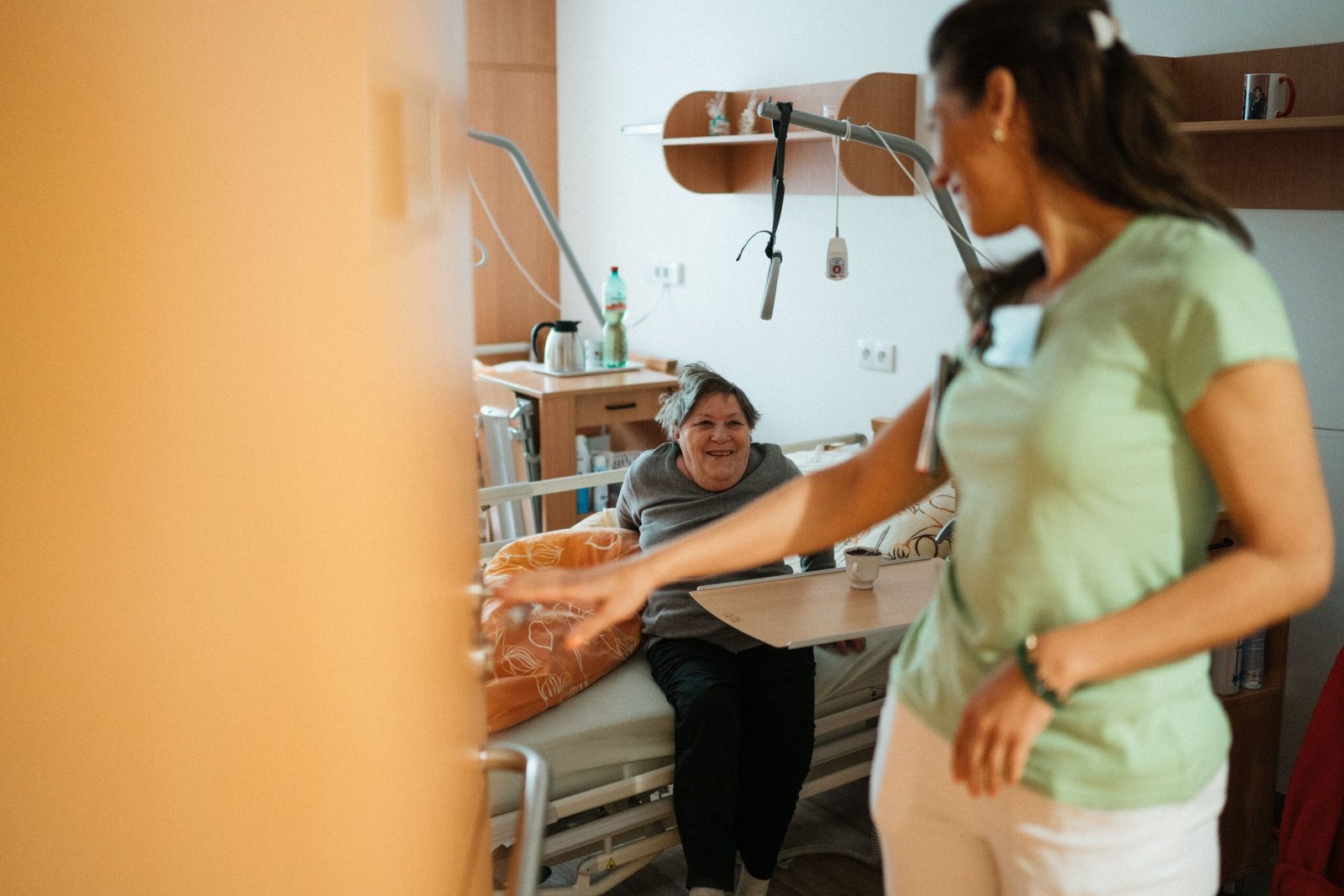
Ask staff to show you the call device at the bedside and in the bathroom. Check whether it is reachable from the likely resting position. Ask whether the device is adapted for residents with limited hand strength, vision, hearing, speech, or cognition. If your parent uses a wheelchair, ask where the call device will be when they are seated.
Observe the unit without staging a fake emergency. Do call lights remain active for long periods? Do staff acknowledge residents who ask for help in the hallway? Does the unit appear chaotic during meals or shift changes? How do staff speak to residents who repeat requests?
Also ask to see the nursing home’s current staffing and inspection information. Our guide to nursing-home staffing ratings explains what those numbers can and cannot tell you, and our guide to nursing-home inspection reports can help you look for patterns that deserve follow-up.
CMS itself cautions that no rating system captures every consideration. Use ratings and inspection history as screening information, then ask how the actual unit operates.
Ask about nights, weekends, and predictable busy periods
A daytime tour can miss the conditions your parent will experience at 2 a.m. or just before dinner.
Ask how many direct-care staff are normally assigned to the unit on each shift and how coverage changes when someone calls out. Do not treat a raw staff count as a guarantee, because resident acuity and unit layout matter. Instead, ask for a realistic example:
“If two residents need transfers, another resident needs the toilet, and a new call comes in, how does the team decide who responds and who follows up?”
Ask whether the facility tracks response by shift or location. If it does, ask what leaders do when one unit or shift has repeated delays. If it does not formally track call-bell response, ask how supervisors learn about unanswered or repeatedly activated calls.
A strong answer does not have to pretend every request can be completed immediately. It should explain how urgent needs are recognized, how residents are kept safe while waiting, and how unfinished assistance is handed off rather than forgotten.
If your parent already lives there, document the pattern
One slow response can have many explanations. A recurring pattern deserves a more structured conversation.
Write down a few specific examples: date, approximate time, what your parent needed, how long they believe they waited, whether anyone acknowledged the call, and what happened afterward. Avoid turning an uncertain estimate into a precise fact; the purpose is to identify a pattern the facility can investigate.
Bring the examples to the nurse or unit manager and ask what the call system records, if anything. If the delay relates to a known need such as toileting, transfers, pain, or repositioning, ask whether the care plan should be reviewed. Our nursing-home care-plan meeting questions can help structure that discussion.
Federal resident-rights rules also give residents the right to voice grievances about care that was furnished or not furnished, and require the facility to make prompt efforts to resolve grievances. If ordinary conversations do not resolve a persistent concern, our guide to raising a nursing-home concern explains a more formal escalation path.
If you believe a resident is in immediate danger or needs emergency medical help, do not wait for a routine grievance process. Seek appropriate emergency assistance.
A practical example
Suppose Maria’s father needs assistance to transfer because he has fallen before. During a tour, the admissions representative says, “Our call lights are answered very quickly.” Maria asks what that means on the long-term-care unit at night.
The nurse manager explains that alerts go to staff devices, that any available aide can acknowledge them, and that transfer requests may require a second staff member. Maria asks what happens if her father tries to stand while the second person is coming. That leads to a more useful discussion about his transfer status, toileting routine, fall risk, and how staff will cue him to wait for help.
Maria has not proven that every call will be answered within a certain number of minutes. She has learned how the home’s response process connects to her father’s actual risk – and what she should revisit in the care plan after admission.
Five questions to take with you
- What is your call-bell response policy or target, and how do you measure it? Ask whether it measures acknowledgment or completed assistance.
- Who receives the alert, and what is the backup when that person is busy? Ask how unanswered calls escalate.
- How do you prioritize urgent needs? Use one of your parent’s likely situations, such as a transfer, toileting need, pain, or breathing problem.
- What do your nights and busy periods look like? Ask how staffing, coverage, and supervision work outside the tour window.
- How do you review repeated delays? Ask about call-system records, supervisory review, care-plan changes, and the grievance process.
When comparing options, use these answers alongside staffing, inspections, your visit, and the resident’s specific needs. You can browse nursing-home and senior-care communities on Nursing Home Placement, then verify staffing, services, response practices, and availability directly with each facility.
Sources and review date
Sources checked October 11, 2026. This article provides general U.S. care-planning information. State requirements, facility policies, resident-specific care plans, and urgent clinical circumstances can create additional expectations.
- eCFR: 42 CFR 483.90 – Physical environment, including resident call system
- eCFR: 42 CFR 483.35 – Nursing services
- eCFR: 42 CFR 483.10 – Resident rights, care planning and grievances
- Medicare: How do I choose a nursing home?
- CMS: Five-Star Quality Rating System
- Ali and Li, 2020: Use of Notification and Communication Technology (Call Light Systems) in Nursing Homes: Observational Study