Hearing Loss in Memory Care: How to Evaluate Communication Support
Hearing loss can make dementia care much harder.
A resident may appear confused, withdrawn, uncooperative, or unable to follow directions when they simply did not hear or understand what was said.
When comparing memory care, ask how staff identify hearing needs, maintain hearing devices, reduce background noise, and adapt communication before labeling behavior as dementia.
Hearing loss is common in older adults
NIDCD reports that about one in three adults ages 65–74 has hearing loss, and nearly half of adults older than 75 have difficulty hearing.
Hearing loss can interfere with:
- medical instructions;
- alarms;
- social interaction;
- telephone use; and
- communication with family and staff.
Ask how hearing ability is documented
The care plan should identify:
- hearing loss diagnosis;
- better ear;
- hearing aids;
- cochlear implant;
- assistive listening devices;
- communication preferences; and
- audiology follow-up.
Ask how new staff see the information.
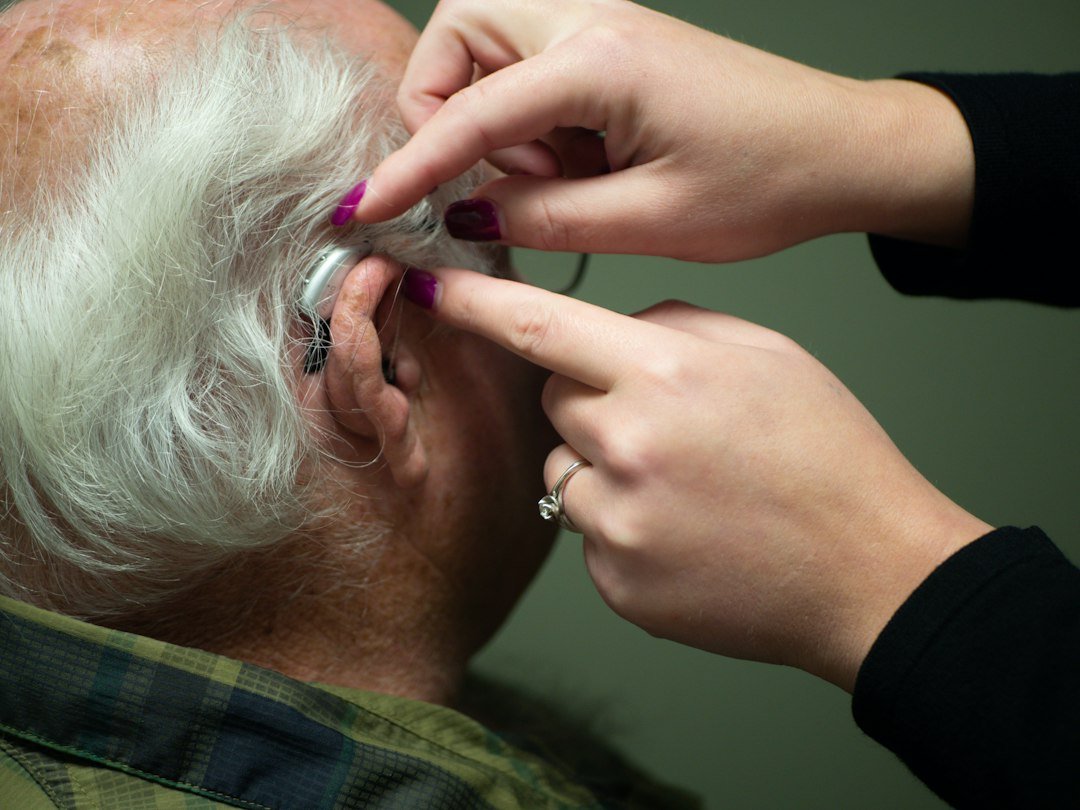
Ask who manages hearing aids
Small devices are easily lost.
Ask:
- Who inserts them?
- Who removes them at night?
- Who changes batteries or charges them?
- Where are they stored?
- What happens if one is lost?
- How is wax or device malfunction recognized?
A hearing aid in a drawer does not improve communication.
Observe background noise
NIDCD recommends reducing background noise and facing the person while speaking.
During a tour, notice:
- television volume;
- dining-room noise;
- hallway alarms;
- group activity acoustics; and
- whether staff speak while facing residents.
Ask whether a resident can move to a quieter area for important conversations.
Dementia communication should not become shouting
Speaking louder can help some people, but shouting may distort speech and feel threatening.
NIDCD recommends speaking clearly, facing the listener, and reducing noise.
Staff may also use:
- visual cues;
- written key words;
- gestures;
- simple sentences; and
- confirmation of understanding.
Hearing loss can affect behavior
If a resident becomes agitated during care, ask:
- Could they hear the instruction?
- Was the hearing aid in place?
- Was the room noisy?
- Did staff approach from the front?
- Was the person startled by unexpected touch?
Behavior assessment should consider sensory barriers.
Ask about professional hearing care
Find out:
- Is audiology available?
- Who transports residents?
- Can mobile hearing services visit?
- Who handles device repairs?
- Is earwax evaluated when hearing suddenly worsens?
OTC hearing aids may be appropriate for some adults with perceived mild-to-moderate hearing loss, while more complex or severe problems warrant professional evaluation.
A practical example
Martha begins refusing showers and swatting at a caregiver.
Her daughter discovers Martha’s hearing aids have not been working for several days.
The caregiver had been approaching from behind and speaking over running water.
After the devices are repaired and staff change their communication approach, bathing becomes less distressing.
Eight questions to ask
- How is hearing loss documented?
- Who manages hearing aids daily?
- How are devices stored and charged?
- What happens if a device is lost?
- How do staff reduce background noise?
- Are communication techniques part of staff training?
- How is sudden hearing decline evaluated?
- How is audiology arranged?
Sources and review date
Sources checked October 12, 2026.
- NIDCD: Age-Related Hearing Loss
- NIDCD: Hearing Aids
- NIDCD: Over-the-Counter Hearing Aids