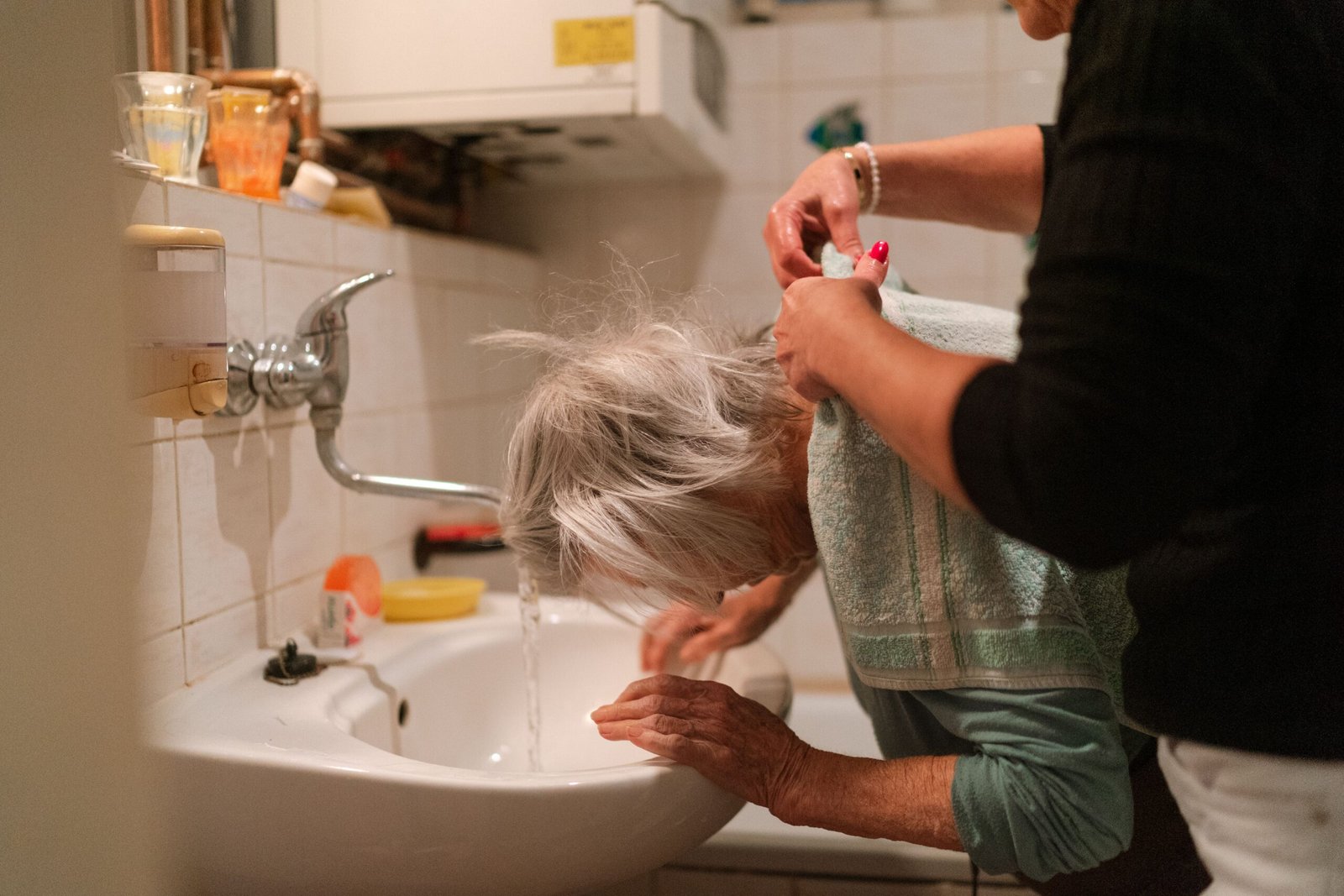
My Parent Has Stopped Bathing: How to Talk About Hygiene and Safety
When an older parent stops bathing, families often jump to one of two explanations: “They’re being stubborn” or “They can’t live alone anymore.”
Neither conclusion is safe to make from hygiene alone.
A change in bathing can be a clue. The real issue may be pain, fear of falling, difficulty getting in and out of the shower, depression, memory loss, embarrassment, incontinence, fatigue, poor vision, a bathroom that no longer fits the person’s abilities, or simply a strong preference about when and how personal care happens.
The goal is not to win an argument about showers. It is to understand what changed, protect the person’s dignity, and decide what level of help is actually needed.
Start with the change, not the smell
A respectful opening sounds different from a confrontation.
Instead of:
“You haven’t showered in a week. This has to stop.”
Try:
“I’ve noticed showering seems harder lately. Is there something about the bathroom or the shower that is bothering you?”
Then listen.
Questions that may uncover the real problem include:
- Does standing in the shower hurt?
- Are you afraid of slipping?
- Is it hard to step over the tub?
- Is the water pressure uncomfortable?
- Does the bathroom feel cold?
- Are you exhausted by the time you finish?
- Is it hard to remember the steps?
- Do you feel embarrassed needing help?
- Would you rather bathe at a different time of day?
- Is there a skin problem, wound, rash, or pain that makes washing uncomfortable?
The answer may point toward a medical evaluation, home modification, personal-care assistance, dementia support, or a simpler adjustment to the routine.
A sudden loss of self-care can deserve medical attention
The National Institute on Aging lists poor hygiene as one sign that an older adult may need extra support.
A new decline in bathing or grooming can also occur alongside:
- depression;
- pain;
- weakness;
- balance problems;
- medication side effects;
- vision loss;
- cognitive change;
- illness; or
- a decline after hospitalization.
If your parent previously managed personal care and suddenly stops, especially along with confusion, weight loss, weakness, falls, mood change, or trouble with other daily tasks, bring the change to a clinician’s attention.
Do not assume the cause is dementia simply because the person is older.
Find out whether the bathroom has become unsafe
Bathing is one of the most fall-prone daily activities because it combines wet surfaces, transfers, reaching, turning, and reduced clothing or footwear support.
CDC fall-prevention guidance recommends measures such as grab bars inside and outside the tub or shower and next to the toilet, and nonslip surfaces in the bathing area.
Walk through the bathroom from your parent’s point of view.
Check:
- Is there a tub wall to step over?
- Is the shower floor slippery?
- Can the person reach a stable grab bar?
- Is there a sturdy shower chair or bench if needed?
- Does the person have to stand on one leg to wash?
- Is the floor wet after the shower?
- Is the lighting good enough?
- Can the person get from the bedroom to the bathroom safely?
- Does the person become dizzy when standing?
- Is the towel rack being used as if it were a grab bar?
- Can the person get help if they become stuck or fall?
A person who says “I don’t want to shower” may really mean “I do not feel safe in there.”
Ask what part of bathing is difficult
“Bathing” is not one task.
It involves:
- getting to the bathroom;
- undressing;
- entering the tub or shower;
- controlling the water;
- washing;
- reaching the feet and back;
- shampooing;
- standing or sitting safely;
- drying;
- skin care;
- dressing again; and
- getting back out of the bathroom.
Your parent may need help with only one or two parts.
For example, someone may be fully able to wash once seated but unable to step over the tub edge. Another person may be physically strong enough but forget the sequence because of cognitive impairment.
Breaking the task into steps can prevent a family from overestimating or underestimating the support needed.
Preserve choice wherever possible
Adults do not lose the right to preferences simply because family members dislike those choices.
Offer control over:
- bath or shower;
- morning or evening;
- full shower or partial wash;
- male or female caregiver when possible;
- which products are used;
- how warm the room is;
- whether music is playing;
- which parts of the task the person does independently; and
- whether family or paid staff provides assistance.
If the person has decision-making capacity, a family member generally cannot simply force personal care.
If you are concerned that dementia, delirium, or another condition has impaired the person’s ability to understand the consequences of refusing essential care, ask the clinician about an appropriate assessment. Capacity and legal authority are state- and situation-specific; a diagnosis alone does not automatically answer the question.
Dementia can make bathing feel threatening
For a person with Alzheimer’s disease or another dementia, bathing can feel confusing, embarrassing, cold, rushed, or frightening.
The National Institute on Aging advises caregivers to prepare supplies in advance, make the bathroom comfortable, offer simple choices, explain each step, allow the person to participate, protect modesty, and avoid leaving the person alone in the bath or shower.
NIA also notes, specifically in its Alzheimer’s caregiving guidance, that a full bath or shower does not have to happen every day and that a sponge bath can be an alternative when a shower is too upsetting.
That dementia-specific guidance should not be turned into a universal bathing schedule for every older adult. Personal hygiene needs depend on skin condition, continence, activity, medical needs, preferences, and the care plan.
Our guide to memory care versus assisted living can help if bathing refusal is part of a broader dementia-care decision.
Use alternatives when a full shower is the barrier
If the primary goal is cleanliness and skin comfort, the family may have more than one workable method.
Depending on the person’s needs and clinician recommendations, options may include:
- a seated shower;
- handheld showerhead;
- sponge or washcloth bathing;
- washing hair separately at the sink;
- washing one body area at a time;
- no-rinse cleansing products when appropriate;
- scheduled incontinence care;
- a bedside or chair-based wash when transfers are temporarily difficult; and
- professional bathing assistance.
The key is to distinguish “does not want a traditional shower” from “is unable to maintain necessary personal hygiene.”
Pay special attention to skin, incontinence, and wounds
A full shower is not the only hygiene issue that matters.
Ask whether your parent has:
- urinary or bowel incontinence;
- skin folds that remain moist;
- open wounds;
- pressure injuries;
- rashes;
- fungal infections;
- drainage;
- odor from a wound rather than ordinary body odor;
- difficulty cleaning after toileting; or
- medical devices that require skin care.
These situations may require more specific clinical guidance than a normal bathing routine.
If there is broken skin, spreading redness, warmth, swelling, pus, fever, severe pain, or another sign of possible infection, seek medical advice promptly.
Consider whether depression is part of the change
Depression in older adults can affect energy, motivation, sleep, appetite, concentration, and interest in everyday activities.
If bathing has declined along with withdrawal, persistent sadness, loss of interest, major sleep changes, hopelessness, or neglect of other basic needs, ask a healthcare professional to evaluate the broader picture.
Do not use “depression” as a criticism.
If your parent talks about suicide or immediate self-harm, use emergency or crisis services.
Personal-care help at home may be enough
An older adult may be able to remain at home with targeted assistance.
NIA describes personal care as help with activities of daily living such as bathing, dressing, grooming, toileting, and eating.
Possible supports include:
- family help;
- a home-care aide;
- scheduled bathing visits;
- occupational therapy for safer routines and equipment;
- physical therapy when balance or transfer ability is part of the problem;
- home modifications; and
- respite care for the family caregiver.
Our guide to home care versus assisted living can help compare increasing home support with moving.
Remember that Medicare home health and private-duty personal care are different services. Medicare coverage depends on specific eligibility and skilled-care requirements; it is not a general payment source for ongoing custodial bathing assistance.
Assisted living may fit when bathing is one of several daily-care needs
Bathing help by itself does not necessarily require assisted living.
The case becomes stronger when bathing difficulty is part of a larger pattern such as:
- dressing assistance;
- medication problems;
- meal preparation difficulty;
- recurrent falls;
- toileting help;
- transfers;
- inability to keep the home safe;
- nighttime supervision; or
- caregiver exhaustion.
If you are considering assisted living, ask exactly how bathing assistance is provided.
Questions include:
- How often can staff assist?
- Is bathing assistance included in the base rate?
- Does it add a care-level charge?
- Can the resident choose shower times?
- Is a same-gender caregiver available when requested?
- Can staff provide a two-person transfer if needed?
- What equipment is available?
- What happens if the resident repeatedly refuses?
Our article on assisted-living assessments before move-in explains how these needs can affect care fit and pricing.
Memory care may be appropriate when refusal is driven by dementia-related support needs
If bathing refusal occurs with significant dementia symptoms, the important question is not whether the community can “make” the person bathe.
Ask whether staff understand dementia-specific personal care.
Look for staff who can:
- approach without rushing;
- recognize fear and embarrassment;
- offer simple choices;
- preserve modesty;
- break the task into steps;
- try again at another time;
- understand the person’s routines and preferences; and
- distinguish behavior change from possible illness or pain.
A memory-care setting should support dignity, not use the diagnosis as permission for coercion.
A nursing home may be needed when personal care is medically or physically complex
Bathing may become part of a nursing-home-level care picture when the person also has substantial needs such as:
- extensive transfer assistance;
- severe mobility limitation;
- complex wounds;
- high pressure-injury risk;
- major swallowing or feeding needs;
- frequent nursing assessment;
- unstable medical conditions; or
- severe cognitive impairment combined with intensive physical assistance.
The care setting should match the whole person, not one hygiene task.
A practical example
Suppose Thomas has stopped showering.
His daughter initially thinks he is refusing because he is stubborn. During a calmer conversation, Thomas admits he is terrified of falling when he steps over the tub.
He has already had two near-falls, and his knees hurt when he stands for long periods.
The family asks his clinician about the pain and mobility change. An occupational therapist helps them evaluate the bathroom. They add appropriate grab bars and a shower bench, and a home-care aide visits twice a week to help with the transfer and setup.
Thomas still washes his face and upper body independently.
The family has not “won” a bathing argument. They have solved the part of the task that had become unsafe.
Five questions to ask before changing the care setting
- Why did bathing change? Look for pain, fear, mobility, depression, cognition, bathroom design, sensory discomfort, and preference.
- Which step is actually unsafe or impossible? Separate getting into the shower from washing, drying, and dressing.
- Can we make the task safer while preserving control? Consider equipment, timing, partial bathing, and targeted assistance.
- Is bathing only one part of a larger decline? Review medications, meals, toileting, falls, cognition, and other activities of daily living.
- What level of care can provide the needed help without taking away more independence than necessary? Compare home support, assisted living, memory care, and nursing-home care based on the whole care picture.
If you are ready to compare options, browse senior-care communities and ask each provider how it handles personal care, bathing assistance, refusal, transfers, and privacy.
Sources and review date
Sources checked October 11, 2026. This article provides general U.S. care-planning information. Medical needs, decision-making capacity, legal authority, personal-care rules, and facility services vary by person, state, and setting.
- National Institute on Aging: Alzheimer’s Caregiving: Bathing, Dressing, and Grooming
- National Institute on Aging: Does an Older Adult in Your Life Need Help?
- National Institute on Aging: Depression and Older Adults
- National Institute on Aging: Services for Older Adults Living at Home
- CDC: Preventing Falls and Hip Fractures
- CDC: STEADI Home Safety Resources