How to Prepare for a Nursing-Home Closure or Evacuation Transfer
A nursing-home closure can feel like an emergency even when families receive advance notice.
An emergency evacuation can happen with almost no warning.
Those situations share one goal—moving residents safely—but they are governed by different planning frameworks.
Families should first determine which situation they are facing, then build a continuity checklist around the resident’s actual needs.
Permanent closure and emergency evacuation are not the same
For a Medicare- or Medicaid-certified nursing facility that is closing, 42 CFR § 483.70(k) generally requires the administrator to provide written notice to the State Survey Agency, State Long-Term Care Ombudsman, residents, and their legal representatives or other responsible parties at least 60 days before closure.
If the Secretary or State terminates the facility’s participation, the Secretary determines the appropriate notice timing.
The closure notice must include a State-approved plan for transfer and adequate relocation of residents. The plan must take into account factors such as quality, services, location, resident needs and choices, and the best interests of each resident.
Emergency preparedness is addressed separately in 42 CFR § 483.73. Certified facilities must maintain an all-hazards emergency plan and policies addressing evacuation or sheltering, resident tracking, subsistence needs, medical documentation, communication, and arrangements with other providers.
A hurricane evacuation today and a facility closure next month are not the same process.
Get the written notice and identify the decision-maker
For a planned closure, keep the written notice and ask:
- What is the closure date?
- What State agency approved the relocation plan?
- Who is the facility’s closure/transition contact?
- Who is the State Survey Agency contact?
- How can the resident or representative reach the Long-Term Care Ombudsman?
- How will facilities be proposed or evaluated for this resident?
- How will resident choice be documented?
Do not rely only on hallway updates or rumors.
For an emergency evacuation, ask where the resident was moved, who is coordinating reunification, and what tracking/communication process the facility is using.
Build a resident-specific transfer sheet
A closing facility may be managing many residents at once. The family can help by making sure the receiving team has a concise picture of the resident.
Include non-secret reminders such as:
- preferred name and communication method;
- hearing, vision, or communication supports;
- mobility level and equipment;
- usual transfer assistance level as documented by the clinical team;
- swallowing or diet orders that must follow the resident;
- allergies;
- current clinicians and specialists;
- dialysis or recurring outside appointments;
- behavior/communication cues;
- sleep and toileting routines;
- emergency contacts; and
- advance-directive or representative information.
This family sheet supplements—not replaces—the clinical record and medication reconciliation.
Confirm the receiving facility has accepted the resident
Do not equate “we sent the referral” with “the new facility is ready.”
Ask for confirmation of:
- exact facility and unit;
- admission date/time;
- receiving contact;
- services the facility has actually agreed it can provide;
- equipment that must be present before arrival;
- outside treatments/appointments that need coordination;
- payer/coverage information still being processed; and
- any required documents or authorizations.
Do not assume current bed availability, staffing, or specialty capability. Verify it directly with the receiving facility.
Reconcile medications through the clinical teams
A transfer can create medication errors if lists, orders, pharmacy information, or timing do not match.
Families can ask:
- Who reconciles the medication list before transfer?
- Has the receiving facility received current orders?
- Which pharmacy will supply medications after arrival?
- Are there time-sensitive or specialty medications requiring extra coordination?
- Who handles a discrepancy after arrival?
Do not change doses, skip medicines, combine supplies, or create your own transfer regimen.
If the medication list appears inconsistent, ask the nurse/clinician/pharmacist to resolve it.
Plan equipment without moving it blindly
The resident may depend on:
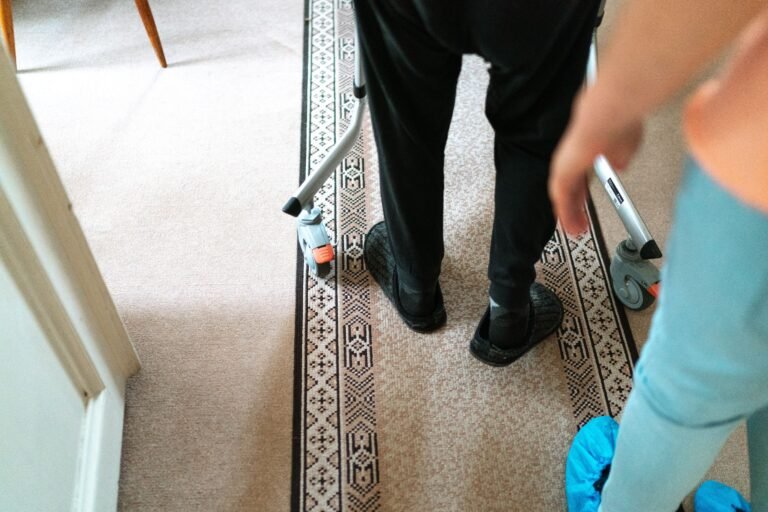
- wheelchair or walker;
- specialty cushion;
- hospital bed;
- oxygen equipment;
- CPAP/BiPAP equipment;
- communication device;
- lift-related sling or accessories;
- ostomy supplies;
- wound-care supplies; or
- other prescribed devices.
Ask who owns each item and whether it will transfer, be replaced, or be supplied at the destination.
Do not disconnect, reprogram, or reconfigure clinical devices yourself.
Protect outside treatment schedules
Closure transfers can disrupt care that happens outside the nursing home.
Review upcoming:
- dialysis;
- oncology treatment;
- wound clinic;
- specialist visits;
- lab monitoring;
- dental/vision/hearing care;
- therapy appointments; and
- transportation bookings.
For each one, identify who is responsible for notifying the provider, arranging transport, sending records, and rescheduling if necessary.
A missed appointment may be clinically important, so unresolved continuity gaps should be brought to the clinical team promptly.
Make the resident’s belongings a separate checklist
The relocation plan centers on the resident, but clothing, glasses, hearing aids, dentures, chargers, mobility equipment, documents, and keepsakes can disappear during a rushed move.
Create an inventory and decide:
- who packs;
- what travels with the resident;
- what travels separately;
- who receives it; and
- how missing items will be reported.
State law and the specific closure plan may govern unclaimed property. There is no single federal packing/storage deadline families should assume applies everywhere.
Ask how records will follow the resident
The receiving facility needs enough clinical information to continue care safely.
Ask whether the transfer packet includes the relevant:
- diagnoses;
- medication orders;
- recent assessments;
- care-plan information;
- treatment orders;
- allergies;
- advance directives;
- representative/contact information; and
- recent hospital/specialist information.
Families should not be expected to recreate the medical record from memory.
If the closing facility will no longer exist, ask who will be responsible for future record requests.
During an evacuation, focus first on location and continuity
Emergency conditions can change the normal workflow.
CMS emergency-preparedness rules require facilities to have processes for tracking residents and staff during and after an emergency, evacuation/shelter decisions, medical-document availability, confidentiality, communication, and arrangements with other facilities/providers.
If you cannot reach the resident:
- use the facility’s emergency contact line;
- ask where the resident was relocated;
- confirm the receiving facility/contact;
- provide updated family contact information; and
- escalate through local emergency management or state channels if the normal facility route fails.
Do not travel into a hazardous area simply to retrieve belongings.
Watch for continuity gaps after arrival
The transfer is not finished when the vehicle leaves the old facility.
Within the first day or two, ask the receiving team to confirm:
- medication reconciliation complete;
- diet/swallow orders received;
- equipment available;
- skin/wound orders received where relevant;
- outside appointments accounted for;
- advance directive/representative information present;
- resident preferences communicated; and
- family contact information correct.
If the resident shows a sudden or meaningful health change, seek prompt clinical evaluation instead of assuming it is “just stress from the move.”
Frequently asked questions
Does every nursing-home closure require exactly 60 days’ notice?
The federal certified-facility rule generally calls for at least 60 days, but when the Secretary or State terminates participation, the Secretary determines the notice timing. State rules and specific enforcement orders may add requirements.
Can the facility simply send the resident anywhere with an open bed?
Federal closure rules require a State-approved transfer/relocation plan that considers resident needs, choices, services, location, quality, and best interests. Ask how the proposed destination fits the individual resident.
Is an emergency evacuation governed by the same closure notice rule?
No. Emergency preparedness is a separate framework. Facilities must maintain an all-hazards emergency plan with evacuation, tracking, communication, documentation, and continuity provisions.
Should family members transport medications and equipment themselves?
Only as specifically directed within the lawful clinical/equipment plan. Do not alter medication regimens or disconnect/configure prescribed devices yourself.
The practical goal
A safe move requires more than a destination.
Confirm acceptance, records, medication continuity, equipment, outside appointments, resident preferences, belongings, transportation, and a named person responsible for unresolved issues.
For a permanent closure, use the written closure plan. For an emergency evacuation, use the facility’s emergency tracking and continuity process.
Primary sources checked
- eCFR — 42 CFR § 483.70(k), Facility Closure
- eCFR — 42 CFR § 483.73, Emergency Preparedness
- eCFR — 42 CFR § 483.15, Admission, Transfer, and Discharge Rights
- CMS — Nursing Home Emergency Preparedness Resources
- ACL — Long-Term Care Ombudsman Program
Editorial/source review: October 16, 2026. General U.S. education only. Closure procedures, evacuation orders, appeals, property rules, and transfer requirements can vary by state and event. Verify the actual notice, closure plan, emergency instructions, and receiving facility.
Next step for families: Browse senior-care communities to compare local options, or use the Care Finder to organize the care needs and your next questions. Always verify current services, staffing, clinical capability, costs, and availability directly with the provider.