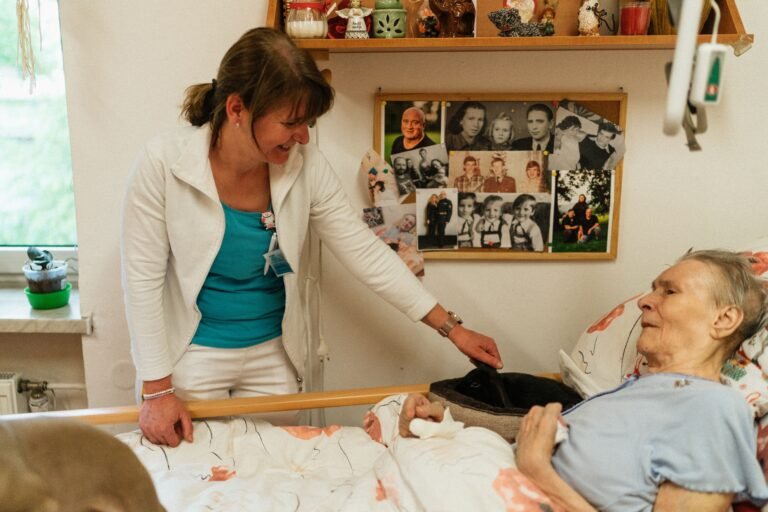

How Long Does It Take to Adjust to Memory Care?
There is no fixed number of days or weeks that every person with dementia needs to “adjust” to memory care. Some residents begin forming a workable routine fairly quickly. Others need much longer, especially when the move happens after a hospitalization, major health change, caregiver crisis, or progression in dementia.
The most useful approach is to watch patterns in sleep, eating, mood, participation, mobility, wandering, and distress rather than judging the placement from one difficult day—or assuming every new symptom is simply part of the adjustment.
Why adjustment can take time
A move changes almost everything at once:
- bedroom and bathroom;
- caregivers;
- meal times;
- noise and lighting;
- daily schedule;
- people nearby;
- navigation cues;
- medication routines;
- sleep environment; and
- the family’s visiting pattern.
For someone with dementia, those changes may be difficult to understand or remember. A resident may repeatedly ask to go home even after the community becomes familiar.
There is no evidence-based “30-day rule” for settling in
Families are sometimes told to expect a specific number of days before visiting, calling, or evaluating the move. There is no single universal adjustment clock that applies to every person with dementia.
The National Institute on Aging says moving to a long-term-care setting is a major change and that it may take time for everyone to adjust. The Alzheimer’s Association similarly notes that a person with dementia may need time to adjust to a new community.
Use the resident’s actual response—not an arbitrary countdown—to guide decisions.
What can happen during the transition
The Alzheimer’s Association notes that moving between care settings may be followed by temporary problems such as:
- sleep changes;
- wandering;
- falls; and
- appetite changes.
Those changes should be tracked, but they should not automatically be dismissed as “normal adjustment.” A fall, major appetite decline, sudden confusion, or severe sleep disruption may need clinical evaluation.
Watch trends instead of isolated visits
A resident can have a difficult afternoon and a calm morning the next day. Ask the care team to look for patterns across several shifts.
Useful things to track include:
- sleep and nighttime waking;
- meals and hydration;
- falls or near-falls;
- wandering or exit-seeking;
- participation in activities;
- toileting and continence;
- pain or other signs of discomfort;
- agitation or withdrawal;
- medication refusal;
- visits and how the resident responds afterward; and
- which routines consistently calm the person.
Share the resident’s old routine in practical detail
Memory-care staff can adapt more effectively when they know what “normal” looked like before the move.
Tell them:
- usual wake and bedtime;
- preferred name;
- morning and evening rituals;
- favorite foods;
- music and hobbies;
- religious or cultural practices;
- communication style;
- what causes fear or frustration;
- how the person shows pain;
- bathroom habits;
- preferred clothing; and
- important family relationships.
A short, usable personal profile is often more valuable than a long biography no one can quickly reference during care.
Keep familiar items, but avoid overwhelming the room
Familiar photographs, bedding, clothing, a favorite chair, or another meaningful object may help the new room feel recognizable when the community’s policies and space allow them.
But too much clutter can make navigation harder and increase fall risk.
For moving-day planning, use Moving a Person With Dementia: How to Reduce Distress on Day One.
Ask when the resident is doing best
The family may see only a small slice of the resident’s day.
Ask staff:
- When is Mom most alert?
- Is she eating better at breakfast or dinner?
- Which caregiver approaches work best?
- Does she join activities when family is not present?
- What time does exit-seeking increase?
- How is she sleeping?
- What happens after I leave?
A resident who cries during family visits may still participate well at other times. Conversely, a calm 30-minute visit does not prove the rest of the day is going smoothly.
Adjust family visits based on the resident’s response
Do not assume the answer is always “visit more” or “stay away for two weeks.”
Try changing:
- time of day;
- visit length;
- number of visitors;
- noise and activity level;
- where the visit happens; and
- the goodbye routine.
For a focused guide, see Family Visits in Memory Care: Timing, Length & Routine.
“I want to go home” does not automatically mean the placement is failing
A person with dementia may say they want to go home because they are frightened, tired, looking for a spouse, remembering an earlier home, or trying to express a need for familiarity and control.
Respond to the emotion before trying to re-explain the entire placement decision.
Ask staff what seems to happen immediately before the resident asks to leave and what helps afterward.
Know the difference between adjustment and a medical change
A sudden change from the resident’s usual baseline deserves attention.
Ask for clinical evaluation when there is:
- sudden or dramatically worse confusion;
- new hallucinations;
- unusual sleepiness or difficulty waking;
- fever or other illness symptoms;
- new weakness;
- repeated falls;
- significant pain;
- major decline in eating or drinking;
- new breathing difficulty; or
- another rapid change in function or behavior.
Dementia progression, delirium, medication effects, infection, dehydration, pain, and other medical problems can overlap. Do not assume everything after the move is psychological adjustment.
Ask for an early care-plan review when the transition is difficult
If the resident is persistently distressed, ask for a structured care discussion rather than relying on scattered phone calls.
Bring questions such as:
- What patterns have staff observed?
- Which interventions help?
- Have medications changed?
- Is pain being assessed?
- Are sleep and toileting needs being met?
- Is the room environment contributing?
- Does the resident need more supervision?
- Is the current program still appropriate?
Signs the resident may be building a workable routine
Progress does not always mean the resident stops asking about home.
Signs of a more stable routine can include:
- accepting help from familiar staff;
- eating more consistently;
- sleep becoming more predictable;
- participating in some preferred activities;
- recognizing parts of the environment;
- fewer distress episodes; or
- recovering more quickly after a difficult moment.
When to question whether the setting is a good fit
A difficult transition does not automatically mean the community is wrong, but persistent problems deserve investigation.
Ask harder questions if:
- basic needs are repeatedly missed;
- staff cannot explain the care plan;
- there are repeated falls or hospital transfers;
- the resident’s nutritional or hydration status is worsening;
- wandering or behavior needs exceed the program’s staffing;
- the community keeps adding one-to-one staffing because normal staffing cannot meet needs;
- communication with the family is consistently poor; or
- the provider says the resident’s needs may exceed its license or capability.
If the provider is considering a move, ask for a reassessment and care-plan meeting before assuming another transition is inevitable.
Support the family adjustment too
Families can experience guilt, grief, relief, doubt, and exhaustion at the same time. NIA specifically notes that caregivers may need support while adjusting to the move.
Do not use guilt as the only measure of whether the decision was right. Compare the resident’s safety, care quality, comfort, connection, and actual needs.
A practical two-week review
Rather than expecting a final answer after a few days, collect useful observations:
- How is the resident sleeping?
- Are meals and fluids adequate?
- Which staff approaches work best?
- Which times of day are hardest?
- How is the resident responding to visits?
- Are falls, wandering, or distress increasing or decreasing?
- Has there been a sudden medical change?
- Does the care plan need adjustment?
Repeat the review as needed. The purpose is not to declare the transition “complete” on a schedule; it is to see whether the care plan is becoming more effective.
Related NHP guides
- Moving a Person With Dementia: A Calmer First Day
- Family Visits in Memory Care
- Meaningful Activities in Memory Care
- Who Qualifies for Memory Care?
Compare memory-care options
If the community is not meeting the resident’s needs, browse memory-care and senior-care communities or use the Nursing Home Placement Care Finder.
Authoritative sources
- National Institute on Aging — Alzheimer’s Caregiving: Finding Long-Term Care
- National Institute on Aging — Long-Term Care Facilities
- Alzheimer’s Association — Changing Care Providers
Reviewed October 24, 2026. General educational information only. A sudden or severe change in cognition, behavior, mobility, eating, breathing, alertness, or function may require clinical evaluation rather than being attributed to adjustment.