How to Ask for a Caregiver Training Session Before Hospital Discharge
A caregiver should not discover at home that the discharge plan assumes a skill no one taught them.
Hospital discharge plans can involve tasks such as helping someone transfer, managing equipment, changing a dressing, giving an injection, monitoring symptoms, or organizing medications. The exact tasks depend on the patient and must come from the clinical team.
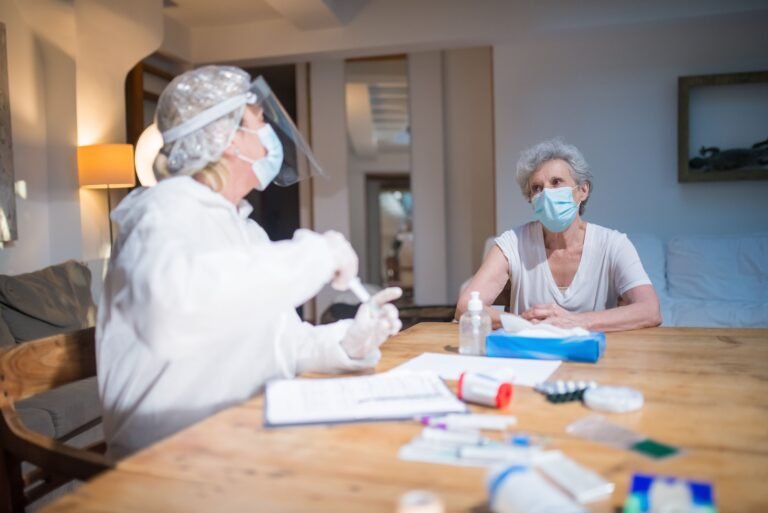
If a family member is expected to perform a task after discharge, ask for supervised teaching before leaving and a chance to show the staff how you will do it.
Medicare’s discharge-planning checklist specifically tells patients and caregivers to ask staff to demonstrate tasks that require special skills and then to demonstrate those tasks back. CMS discharge-planning guidance also emphasizes involving caregivers and support people in planning for post-discharge care.
This article will not teach clinical procedures. It will help you ask for the right training.
Start by asking what the plan expects from the caregiver
Use a direct question:
“What tasks does the discharge plan assume I will personally perform?”
Do not settle for “help at home.”
Ask whether the caregiver is expected to help with:
- mobility or transfers;
- toileting or bathing;
- medication administration;
- injections;
- wound or dressing care;
- oxygen or other equipment;
- feeding or nutrition tasks;
- symptom monitoring;
- positioning;
- appointments and transportation; or
- another task specific to the treatment plan.
Then ask which tasks require professional services and which ones the family is expected to handle.
Say what you cannot safely do
Caregivers often feel pressure to sound agreeable. That can make the discharge plan look more workable than it is.
It is appropriate to say:
- “I have never done that.”
- “I cannot safely lift him.”
- “I need to see this more than once.”
- “I cannot be here overnight.”
- “My hands are not strong enough to perform that task.”
- “I do not understand which medication is given when.”
- “I am not comfortable doing this without professional help.”
Those statements are information the discharge team needs.
Ask for a scheduled training session
If possible, arrange a specific time when the caregiver, patient, nurse, therapist, pharmacist, respiratory therapist, dietitian, or other appropriate professional can meet.
Ask:
- Who will teach the task?
- What equipment or supplies should be present?
- Can we practice with the same type of equipment that will be used at home?
- Can I demonstrate the task back?
- What mistakes or warning signs should make me stop and call for help?
- Who is the after-hours contact?
- Will written instructions be included in the discharge materials?
A rushed explanation at the doorway is not the same as a planned skill session.
Use teach-back instead of “Do you understand?”
A caregiver may say “yes” because the explanation sounded clear, then realize at home that steps are missing.
A better close is:
“Can I show you how I understand I’m supposed to do this so you can correct me?”
For medication instructions, that may mean explaining which current list the family will use and what questions remain. For equipment, it may mean demonstrating setup or use under staff supervision. For mobility, it may mean practicing only the technique the treating team has specifically prescribed.
Do not imitate a transfer, injection, wound-care technique, or equipment setup from a generic online article or video when the clinical team has not trained you for the patient’s situation.
Ask what happens if you cannot master the task
Training can reveal that the discharge plan needs to change.
If the caregiver cannot safely perform a required task, ask about alternatives such as:
- home health or another skilled service when appropriate;
- durable medical equipment or a different device;
- additional caregiver coverage;
- rehabilitation or another care setting;
- a different treatment arrangement, if the treating clinician considers it appropriate; or
- a revised discharge plan when clinically and administratively appropriate.
The family should not independently alter treatment to make the plan easier.
Medicare caregiver training after discharge is a separate benefit
Medicare Part B may cover certain caregiver training services when a health care provider determines that caregiver training is appropriate for the patient’s treatment plan and other requirements are met.
That coverage is different from asking the hospital to prepare a caregiver for an immediate discharge. Do not assume a future covered training visit solves a skill gap that matters on the first night home.
Ask the hospital what must be learned before discharge and ask the treating provider whether additional caregiver training services may be appropriate afterward.
Caregiver skill-readiness checklist
| Task | Who teaches it? | Caregiver practiced? | Written instructions? | Backup/contact |
|---|---|---|---|---|
| Mobility/transfer task | Yes / No | Yes / No | ||
| Medication task | Yes / No | Yes / No | ||
| Wound/dressing task | Yes / No | Yes / No | ||
| Equipment task | Yes / No | Yes / No | ||
| Monitoring task | Yes / No | Yes / No | ||
| Other | Yes / No | Yes / No |
Mark any row unresolved before leaving.
Frequently asked questions
What if the nurse says there is no time for training?
Ask the discharge planner or charge nurse how the skill gap will be addressed safely. State the exact task the family cannot perform.
Should I record the training on my phone?
Ask the facility and clinician first. Privacy rules, hospital policies, other people in the room, and the clinical situation matter. Written instructions and supervised practice should not be replaced by an unapproved recording.
Can I refuse to perform a task?
Tell the care team what you can and cannot safely do. The discharge plan should be based on the actual available support, not assumed family capacity.
Related NHP guides
- https://nursinghomeplacement.com/hospital-discharge-planner-questions/
- https://nursinghomeplacement.com/discharge-with-oxygen-or-a-hospital-bed-who-arranges-equipment/
- https://nursinghomeplacement.com/preparing-a-parent-s-home-for-safe-return-after-rehab/
Primary sources checked
- Medicare — Your Discharge Planning Checklist: https://www.medicare.gov/publications/11376-your-discharge-planning-checklist.pdf
- CMS — Hospital Discharge Planning, 42 CFR §482.43 interpretive guidance: https://www.cms.gov/files/document/r238soma.pdf
- Medicare — Caregiver Training Services: https://www.medicare.gov/coverage/caregiver-training-services
- AHRQ — Re-Engineered Discharge Toolkit: https://www.ahrq.gov/patient-safety/settings/hospital/red/toolkit/redtool3a.html
*Editorial/source review: October 15, 2026. General education only; this article does not teach or prescribe a clinical procedure.*