What to Pack for a Nursing Home Move: A Practical Family List
Moving into a nursing home is not the same as packing for a hotel stay. The resident is moving into a new home, often while recovering from illness, adapting to less space, or depending on other people for laundry, medication management, mobility, and personal care.
The best packing list therefore starts with two questions:
- What will make this room feel familiar and functional?
- What does this specific nursing home allow, supply, label, launder, store, or prohibit?
Federal nursing-home rules recognize a resident’s right to retain and use personal possessions, including furnishings and clothing, as space permits, unless doing so would infringe on the rights or health and safety of other residents. The facility must also provide a safe, clean, comfortable, homelike environment and exercise reasonable care to protect resident property from loss or theft.
That does not mean every piece of furniture, appliance, medication bottle, or valuable should come on move-in day. Ask the facility first, then pack deliberately.
Start with the nursing home’s own move-in list
Before buying bins or packing boxes, ask the admissions or social-services team for the facility’s current list of:
- items it supplies;
- items families should bring;
- prohibited items;
- electrical-item rules;
- furniture-size limits;
- laundry and labeling requirements;
- storage limitations;
- medication and medical-supply procedures; and
- rules for valuables, cash, electronics, food, and personal appliances.
A general internet checklist cannot tell you whether a specific building allows a coffee maker, heated blanket, extension cord, refrigerator, recliner, or large dresser.
If possible, see the actual room before move-in. Measure open wall space, closet width, drawer space, and the path needed for a walker, wheelchair, lift, or staff assistance.
Clothing: pack for comfort, care, and laundry reality
A practical first clothing supply often includes enough for roughly one to two weeks, depending on the facility’s laundry schedule and the resident’s needs.
Consider:
- comfortable daytime outfits;
- sleepwear;
- underwear;
- socks;
- sweaters or layers;
- non-skid or well-fitting shoes;
- slippers only if the care team considers them safe;
- a coat or weather-appropriate outerwear;
- adaptive clothing if dressing is difficult; and
- a nicer outfit if the resident enjoys outings, religious services, or events.
Choose clothing that is comfortable, easy to put on, and appropriate for the resident’s mobility and care needs.
Avoid sending an entire seasonal wardrobe on day one. You can add or rotate clothing after you learn how much storage the room actually has.
Label clothing and frequently used belongings
Laundry is one of the easiest ways for items to become separated from their owner.
Ask the nursing home how it wants belongings labeled. The facility may use heat-sealed labels, permanent marker, sewn labels, barcodes, or another system.
Label items the facility recommends, which may include:
- shirts and pants;
- sleepwear;
- coats;
- shoes;
- blankets;
- towels brought from home;
- wheelchair cushions;
- eyeglass cases;
- hearing-aid cases; and
- other frequently handled personal items.
Use the resident’s name or the facility’s preferred identifier. Do not create a labeling system that conflicts with the laundry process.
Before move-in, take a simple inventory or photographs of higher-value belongings.
Federal rules also prohibit a Medicare- or Medicaid-certified facility from requiring a resident to waive potential facility liability for loss of personal property as a condition of admission. That does not make every loss automatically reimbursable; it means families should understand the facility’s property policy rather than signing away rights as a routine admission condition.
Shoes and mobility items deserve special attention
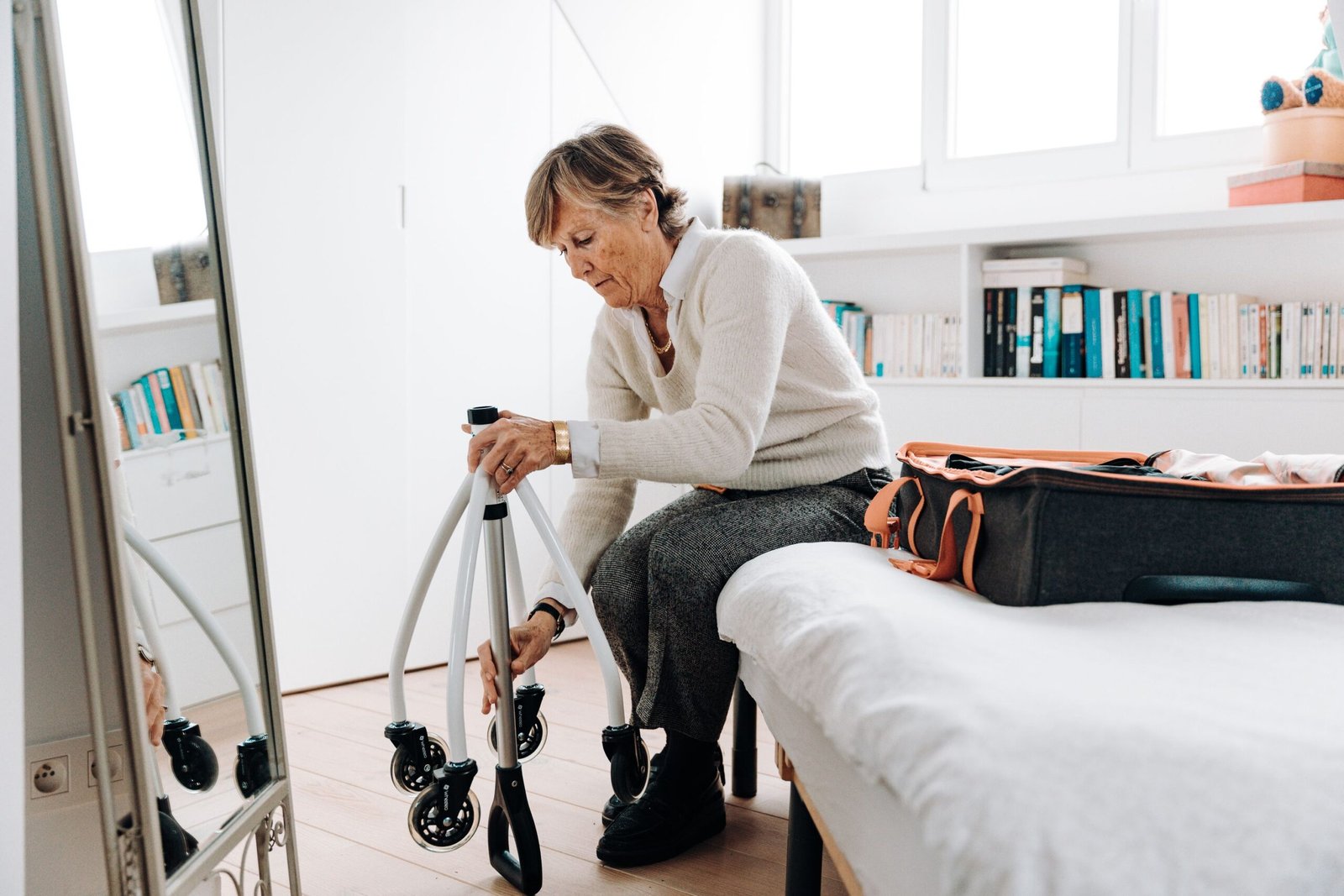
Bring the mobility equipment the care team expects the resident to use, such as:
- walker;
- wheelchair;
- cane;
- orthotic;
- prosthesis; or
- other prescribed or routinely used device.
Confirm ownership before labeling equipment that belongs to a hospital, rehabilitation provider, hospice, DME company, or insurer.
For shoes, prioritize fit and safety over appearance. Feet can swell, and a shoe that used to fit may no longer be appropriate after hospitalization.
If the resident has had recent falls or a change in mobility, ask nursing or therapy staff to confirm the safest footwear and equipment.
Do not add a bed rail, restraint-like device, transfer pole, cushion, lift sling, or other care equipment to the room simply because it was used at home. The nursing team should determine what is appropriate in the facility environment.
Bring essential sensory and communication items
A move is harder when a resident cannot see, hear, or communicate as well as usual.
Pack and clearly identify:
- eyeglasses;
- hearing aids;
- hearing-aid charger or batteries;
- dentures and labeled denture cup;
- communication board or device;
- phone and charger;
- tablet and charger, if used; and
- any familiar adaptive device the care team has approved.
Keep cases labeled.
If hearing aids, dentures, or glasses are expensive, ask how the facility documents these items and what routine is used to keep them from being misplaced during bathing, meals, sleep, or room cleaning.
Toiletries: ask what is supplied before buying duplicates
The facility may supply basic personal-care items, while the resident may prefer familiar brands.
Ask before bringing:
- toothbrush and toothpaste;
- denture supplies;
- hairbrush or comb;
- deodorant;
- shampoo;
- lotion;
- shaving supplies;
- cosmetics;
- tissues; and
- other personal-care products.
Some products may need to be stored or supervised because of swallowing risk, cognitive impairment, ingredients, or facility policy.
Label the items the facility asks you to label.
A favorite lotion or familiar shampoo can make a room feel more normal, but a cluttered bathroom cart can create more work than comfort.
Do not pack medications as if the resident will self-manage them
Medication procedures should be coordinated with the nursing home before move-in.
Do not simply place prescription bottles, pill organizers, insulin, supplements, eye drops, or over-the-counter medicines in a suitcase and assume the resident can keep them at bedside.
Ask:
- which medications the facility will obtain;
- whether the family must bring an initial supply;
- how controlled medications are transferred;
- how refrigerated medications are handled;
- whether any medication can remain at bedside;
- how supplements and over-the-counter products are approved; and
- what documents or pharmacy information are needed.
Bring an accurate medication list even if the facility receives separate orders.
If admission follows a hospital or rehab stay, reconcile the medication list with the discharging team and the receiving nursing home rather than relying on old home bottles.
Our nursing-home admission documents checklist covers the paperwork side of admission in more detail.
Make the room personal without blocking care
Personal possessions can support identity, memory, comfort, and a homelike environment.
Consider a small number of meaningful items such as:
- framed family photographs;
- favorite blanket or quilt, if allowed;
- a familiar pillow, if appropriate;
- books;
- religious or spiritual items;
- clock or calendar;
- artwork;
- small keepsakes;
- favorite music device;
- familiar decorations; or
- one small piece of approved furniture.
Federal guidance encourages facilities to support personal possessions because they help create a homelike environment, subject to space, safety, fire-code, and other residents’ rights.
Choose items that matter. A few familiar objects usually do more for the room than filling every surface on the first day.
For a person with dementia, familiarity can be especially useful. Our guide to moving a person with dementia discusses how routines and familiar belongings can reduce unnecessary disruption.
Ask before bringing furniture or electrical items
Do not assume that because an item fits in the room it is permitted.
Ask before bringing:
- recliner;
- dresser;
- lamp;
- television;
- mini refrigerator;
- fan;
- electric blanket;
- heating pad;
- space heater;
- coffee maker;
- microwave;
- extension cord;
- power strip; or
- other plug-in device.
Facilities may have fire, electrical, infection-control, maintenance, or space restrictions. Some items may require inspection before use.
Furniture must also leave enough space for staff to provide care and for mobility equipment to move safely.
A beloved recliner is not helpful if it makes a wheelchair transfer unsafe.
Be conservative with cash, jewelry, and valuables
Bring only the valuables the resident truly wants and can reasonably use.
Before sending jewelry, collectibles, cash, expensive electronics, or irreplaceable family items, ask:
- whether the room has secure storage;
- whether the facility offers a resident trust or safekeeping process;
- how property is inventoried;
- how losses are reported;
- what insurance or facility policies apply; and
- whether a less valuable substitute would serve the same purpose.
The federal resident-rights rules require reasonable care to protect property from loss or theft, but prevention is still easier than trying to replace an irreplaceable item.
Photograph or inventory valuable items that do move with the resident.
Do not bring original estate documents, large amounts of cash, or irreplaceable heirlooms merely because there is a drawer available.
Food and snacks require a care-plan check
A familiar snack can be comforting, but diet and swallowing needs can change after illness.
Before stocking a drawer with food, ask about:
- prescribed diet;
- texture or swallowing restrictions;
- diabetes plan;
- allergies;
- food storage;
- refrigeration;
- expiration dates;
- pest-control rules; and
- whether staff need to know about outside food.
If the resident has swallowing precautions, do not bring food that conflicts with the current plan simply because it was a favorite at home.
Pack a first-day bag separately
The resident may arrive before every box is unpacked.
Keep one clearly labeled bag with the items most likely to be needed during the first several hours:
- comfortable change of clothes;
- sleepwear;
- basic toiletries;
- eyeglasses;
- hearing aids and charger/batteries;
- dentures and supplies;
- phone and charger;
- current medication list;
- insurance information;
- essential contact information; and
- one familiar comfort item.
Ask the facility which documents should travel with the resident rather than be placed in the suitcase.
The first-day bag reduces the chance that an important hearing-aid charger ends up at the bottom of a moving box.
Create a small room inventory after move-in
Once the room is set up, make a brief list of the items that would be difficult or costly to replace.
You do not need to catalog every pair of socks.
Consider documenting:
- electronics;
- mobility devices owned by the resident;
- hearing aids;
- dentures;
- eyeglasses;
- jewelry that remains;
- valuable clothing;
- special furniture; and
- sentimental objects.
Ask whether the nursing home maintains its own property inventory and how additions should be reported later.
Update the inventory when expensive items come or go.
What not to bring on day one
Unless the facility has specifically approved them, avoid arriving with:
- large furniture;
- space heaters or other high-heat appliances;
- extension cords;
- weapons;
- alcohol;
- cannabis or other controlled products;
- loose prescription medications;
- large amounts of cash;
- irreplaceable jewelry or heirlooms;
- foods that may conflict with diet/swallowing restrictions;
- bulky rugs that may create a trip hazard; or
- equipment the clinical team has not approved.
Facility and state rules vary, so this is not a universal prohibited-items list. The point is to verify before packing anything that affects safety, medication control, fire risk, or care delivery.
A practical example
Linda is moving her mother, June, into a nursing home after rehabilitation.
Linda initially packs three large boxes of clothing, a heavy recliner, a small refrigerator, every medication bottle from home, two jewelry boxes, and family photographs.
The admissions nurse asks her to hold the medications until pharmacy and orders are reconciled. Maintenance needs to inspect electrical items. The recliner would narrow the wheelchair path. The facility already provides a refrigerator for approved resident food.
Linda changes the plan. June moves in with labeled clothing, safe shoes, hearing aids, glasses, toiletries, photographs, her favorite quilt, books, phone charger, and one small keepsake. Linda photographs the hearing aids and jewelry June chose to keep. The family brings seasonal clothing later after seeing the closet space.
The room still feels like June’s. It is simply easier to live and provide care in.
Five questions before you finish packing
- What does this facility supply, prohibit, inspect, or require us to label? Get the current move-in list.
- What does the resident actually use every week? Prioritize function and familiarity over volume.
- Could this item interfere with care or safety? Think about transfers, wheelchairs, fire/electrical rules, diet, and medications.
- Would we be devastated if this item were lost? Consider keeping irreplaceable valuables somewhere safer.
- Have we documented the expensive items that are coming? Use the facility’s inventory process and keep your own simple record.
Residents of Medicare- or Medicaid-certified nursing homes have federal rights to dignity, a homelike environment, and personal possessions within reasonable space and safety limits. Packing thoughtfully supports those rights while giving staff enough room to provide care.
You can browse nursing-home and senior-care communities on Nursing Home Placement, then ask the receiving facility for its exact move-in, labeling, property, medication, and room-safety policies before packing.
Sources and review date
Sources checked October 11, 2026. Facility rules, room size, fire codes, medication procedures, diet restrictions, and state requirements vary. Verify the receiving nursing home’s current policies and the resident’s current care plan.
- eCFR: 42 CFR 483.10 — Resident rights, including rights related to dignity, personal possessions, homelike environment, and protection of property
- eCFR: 42 CFR 483.15 — Admission, transfer, and discharge rights, including the prohibition on requiring a waiver of potential facility liability for lost personal property
- CMS: State Operations Manual, Appendix PP, resident-rights guidance on personal possessions and homelike environment
- Medicare: Your Guide to Choosing a Nursing Home