When the Healthy Spouse Underestimates How Much Help Is Needed
One spouse says:
“We are doing fine at home.”
Adult children see missed medications, an exhausted caregiver, difficult transfers, spoiled food, and canceled appointments.
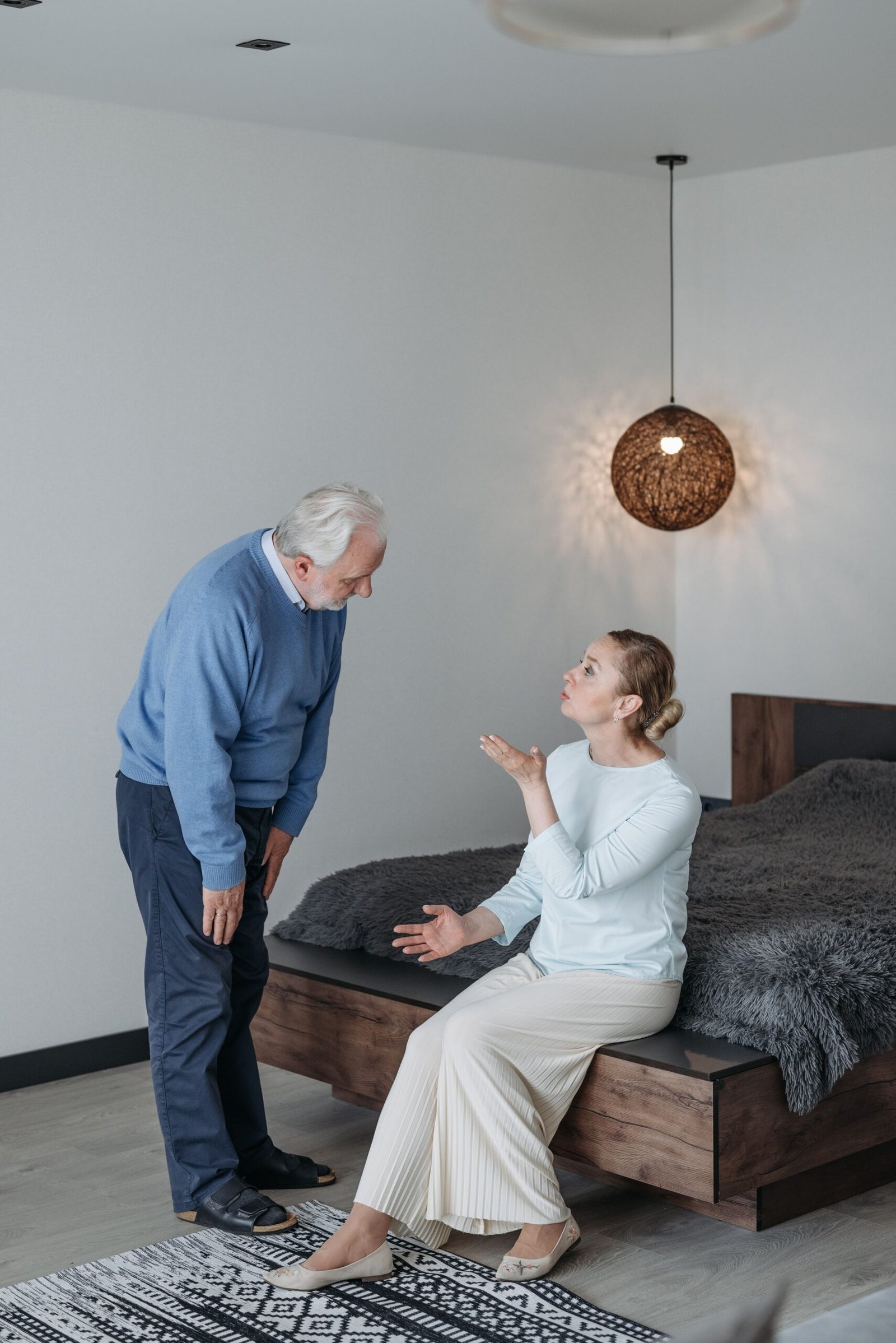
The family starts arguing about whether the spouse is “in denial.”
That label rarely helps.
A better conversation asks: Which daily tasks are being completed reliably, which are not, and what support would close the gaps?
Make the disagreement concrete
Avoid broad statements such as:
- “Dad needs a nursing home.”
- “Mom can’t handle him anymore.”
- “You’re not being realistic.”
Instead list observable tasks:
- morning transfer takes 30 minutes and required neighbor help twice this week;
- three evening medications were missed;
- spouse has stopped attending their own appointments;
- bathing now requires hands-on help;
- parent has fallen twice;
- caregiver is awake four times each night.
Facts create a care-planning discussion. Labels create a defense.
Ask the caregiving spouse what is hardest
The “healthy” spouse may be protecting independence, privacy, finances, identity, or a promise made long ago.
Ask:
- Which part of the day is hardest?
- What task are you most worried about someone else doing?
- What would make outside help acceptable?
- What do you want to keep doing yourself?
- What are you afraid will happen if we bring in help?
Do not assume refusal means lack of capacity.
Compare the workload with the caregiver’s actual capacity
Care need is only half of the equation.
Also consider the caregiving spouse’s:
- strength and mobility;
- sleep;
- chronic health conditions;
- cognition;
- hearing/vision;
- driving ability;
- work or other obligations; and
- willingness to perform the task.
A plan is not safe merely because one spouse has managed so far.
Bring clinicians specific observations
If the care recipient has meaningful new health, mobility, behavior, or cognitive changes, ask the appropriate clinician for assessment.
Do not ask the clinician only:
“Does Dad need a nursing home?”
Ask task-based questions:
- What assistance does he need for transfers?
- Is he safe to be alone for four hours?
- What medication support is required?
- What signs should trigger urgent evaluation?
- Is home therapy or equipment indicated?
- What caregiver training is appropriate?
Do not perform transfer techniques or adjust prescribed equipment based on generic internet instructions.
Try a small support before debating a permanent move
If the situation is not immediately unsafe, a limited trial can produce useful information.
Examples:
- two home-care visits per week;
- meal delivery;
- transportation for appointments;
- adult day services;
- respite afternoon;
- housekeeping; or
- medication delivery/packaging arranged through appropriate providers.
After two to four weeks, ask:
- Did the caregiver sleep more?
- Were appointments kept?
- Were meals more consistent?
- Did stress decrease?
- Which gaps remained?
A trial can turn an abstract disagreement into evidence.
Do not use the trial to hide a crisis
A trial of modest help is not appropriate if the older adult has immediate unmet clinical/safety needs that require urgent assessment.
Repeated falls, inability to transfer safely, sudden confusion, severe weakness, breathing problems, significant dehydration, or other acute changes need appropriate clinical attention.
Do not make a family compromise the substitute for evaluation.
Talk about “more help,” not only “placement”
Families sometimes present two choices:
- spouse does everything; or
- parent moves to a nursing home.
There may be intermediate options depending on assessed needs and local availability:
- home care;
- home health when eligibility is met;
- adult day services;
- respite;
- assisted living;
- memory care;
- rehabilitation; or
- skilled nursing.
No setting is automatically right because one spouse is tired.
Respect the care recipient’s own preferences
Do not turn the healthier spouse into the only decision-maker by default.
If the care recipient can participate, ask what they want and what help feels acceptable.
If formal decision-making authority is needed, review the actual legal documents and state law.
Frequently asked questions
Is underestimating care needs a sign of dementia?
Not by itself. People can disagree about risk, value independence differently, or minimize problems for many reasons. If cognition is a concern, ask for appropriate clinical evaluation rather than diagnosing from family conflict.
What if the spouse refuses all help?
Start with the smallest practical support and the hardest task. If refusal leaves serious unmet needs or creates danger, involve clinicians and appropriate community/protective resources based on the facts.
Should adult children take over?
Not automatically. Help can be shared among family, friends, paid services, and community programs. The older adults’ preferences and legal authority still matter.
The practical goal
Replace “You’re not coping” with “Here are the tasks, here is what is not getting done, and here is one small support we can test.”
That keeps the conversation centered on care rather than blame.
Primary/authoritative sources checked
- National Institute on Aging — Does an Older Adult in Your Life Need Help?
- National Institute on Aging — Taking Care of Yourself: Tips for Caregivers
- National Institute on Aging — Sharing Caregiving Responsibilities
- Administration for Community Living — National Family Caregiver Support Program
- ACL Eldercare Locator
Editorial/source review: October 16, 2026. General U.S. education only. Disagreement about care is not a diagnosis of incapacity. Sudden or meaningful health/behavior changes should be clinically evaluated.
Next step for families: Browse senior-care communities to compare local options, or use the Care Finder to organize the care needs and your next questions. Always verify current services, staffing, clinical capability, costs, and availability directly with the provider.