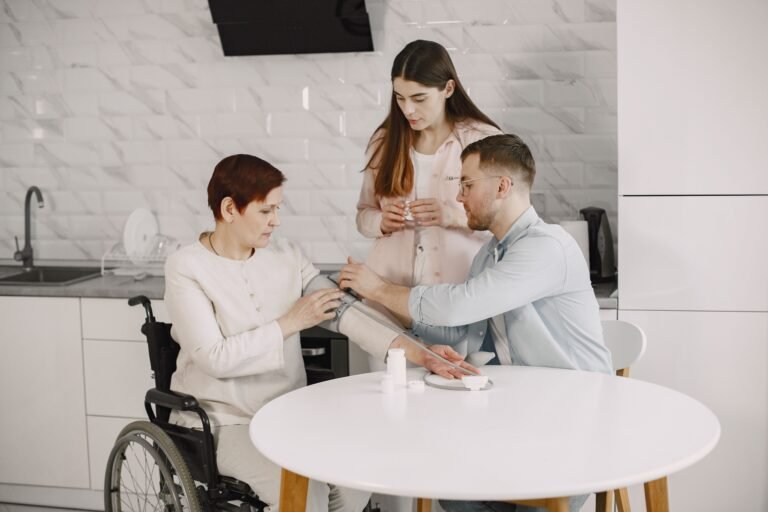
When a Family Friend Offers to Manage an Older Adult’s Care
Sometimes the person who is best positioned to help an older adult is not a child or spouse.
It may be:
- a longtime neighbor;
- family friend;
- former coworker;
- church member;
- partner who is not legally married;
- trusted friend who lives nearby.
That person may know the older adult well and be more available than relatives who live far away.
A friend can be enormously helpful.
But families should separate three different questions:
- What does the older adult want the friend to do?
- What information may the friend receive?
- What legal authority, if any, does the friend actually have?
Friendship alone does not answer all three.
Start with the older adult’s choice
When the older adult can make the decision, ask them directly:
- Do you want this friend involved?
- In which tasks?
- What information can be shared?
- What should stay private?
- Can the friend speak to the nursing home?
- Attend care meetings?
- Coordinate appointments?
- Handle bills?
- Make decisions if you cannot?
Write down the answer.
A vague statement such as "Susan helps me with everything" can create problems later.
Practical help does not always require legal decision-making authority
A friend may be able to help with:
- transportation;
- groceries;
- scheduling;
- visit coordination;
- taking notes;
- accompanying the person to appointments;
- organizing a care calendar;
- helping the older adult make phone calls;
- bringing clothing or supplies.
Those tasks are different from:
- consenting to treatment;
- signing an admission agreement;
- accessing a bank account;
- changing beneficiaries;
- making health-care decisions for an incapacitated person;
- selling property.
Do not let a helpful logistics role quietly expand into legal authority no one actually granted.
HIPAA does not require the helper to be a relative
HHS explains that a covered health-care provider may share information directly relevant to care or payment with a family member, friend, or other person identified by the patient, when the HIPAA conditions are met.
That does not mean a friend automatically receives the entire medical record.
If the person is formally authorized under applicable law to make health-care decisions, they may be treated as the person’s HIPAA personal representative for the relevant scope.
State law affects who qualifies and how authority is created.
Make a communication plan
Ask the facility to document, as appropriate:
- the resident’s preferred contact person;
- who may receive routine updates;
- who may be called in an emergency;
- who has formal decision-making authority;
- who may attend care-plan meetings;
- whether information may be left by voicemail;
- backup contact.
Do not use "emergency contact" as shorthand for power of attorney.
Those are different concepts.
Be cautious with money
A friend may offer to pay bills or "manage everything."
That is the point to slow down.
If the friend is going to control money or property, determine the actual authority.
Possible roles include:
- agent under a financial power of attorney;
- trustee;
- court-appointed guardian or conservator;
- Social Security representative payee;
- VA fiduciary.
Those roles have different duties and limits.
The CFPB’s Managing Someone Else’s Money guides emphasize fiduciary responsibilities such as acting in the person’s best interest, managing carefully, keeping property separate, and maintaining good records.
A person should not begin using another adult’s accounts simply because the password was shared informally.
Watch for conflicts of interest
A friend can be both caring and financially interested.
Ask whether the friend:
- expects payment;
- lives in the older adult’s home;
- will inherit;
- has borrowed money;
- sells a service;
- is recommending a facility or provider from which they benefit;
- controls access to the older adult.
A conflict does not automatically mean misconduct.
It means the arrangement should be transparent and documented.
Keep a simple activity record
A care-coordinating friend should consider tracking:
- calls made;
- appointments arranged;
- questions waiting for answers;
- expenses paid on the resident’s behalf;
- receipts;
- decisions made by the resident;
- decisions made by a legally authorized representative;
- unresolved concerns.
The record helps prevent confusion when relatives or professionals later ask what happened.
Do not create a broad shared document full of private diagnoses or account numbers.
Set boundaries with relatives
Relatives may say:
"She’s not family."
The older adult’s preference matters.
If the person wants a trusted friend involved, the family should not assume blood relationship automatically gives relatives greater permission to receive information.
At the same time, the friend should not claim powers that belong to a legally authorized representative.
Build backup coverage
One friend should not become the entire care system.
Ask:
- Who covers if the friend is sick?
- Who knows the medication list and appointment schedule?
- Who has lawful authority in an emergency?
- Who can access needed documents?
- Who handles the friend’s own travel or work conflicts?
- Who takes over if the arrangement ends?
A durable plan survives one person’s absence.
Know when a professional role may help
Families may need:
- Area Agency on Aging resources;
- geriatric care management;
- social work;
- elder-law advice;
- benefits counseling;
- financial planning;
- tax advice;
- mediation.
Do not assume a friend should perform work that requires professional licensure or specialized authority.
A practical example
Mrs. Lee asks her neighbor Denise to help coordinate care.
Denise can:
- drive her to appointments;
- attend meetings with permission;
- help keep a calendar;
- call the facility about routine logistics.
Mrs. Lee’s niece holds the financial power of attorney.
No one has yet relied on a health-care proxy for decision-making because Mrs. Lee continues to make her own decisions.
The family records those roles instead of calling both women "the person in charge."
That prevents later conflict.
Questions to settle
- What does the older adult want the friend to do?
- What may the friend discuss with providers?
- Is the friend an emergency contact, routine contact, or legal representative?
- Who controls finances?
- Who signs contracts?
- Is the friend being paid?
- Is there a conflict of interest?
- What records should be kept?
- Who is the backup?
- When should the arrangement be reviewed?
The practical goal
A family friend can be an excellent part of a senior-care team.
The safest version of the arrangement is not:
"Everyone knows Denise handles everything."
It is:
"These are the tasks Denise handles, these are the permissions she has, these are the decisions she does not have authority to make, and this is the backup plan."
Primary/authoritative sources checked
- HHS — Family Members and Friends Under HIPAA
- HHS — Personal Representatives Under HIPAA
- HHS — HIPAA Communication With Family, Friends, and Others Involved in Care
- Consumer Financial Protection Bureau — Managing Someone Else’s Money
- National Institute on Aging — Sharing Caregiving Responsibilities
- Administration for Community Living — Eldercare Locator
Editorial/source review: October 16, 2026. General U.S. education only. Health-care proxy, power-of-attorney, guardianship, fiduciary, and consent rules depend on the actual documents and applicable state law.
Next step for families: Browse senior-care communities to compare local options, or use the Care Finder to organize the care needs and your next questions. Always verify current services, staffing, clinical capability, costs, and availability directly with the provider.