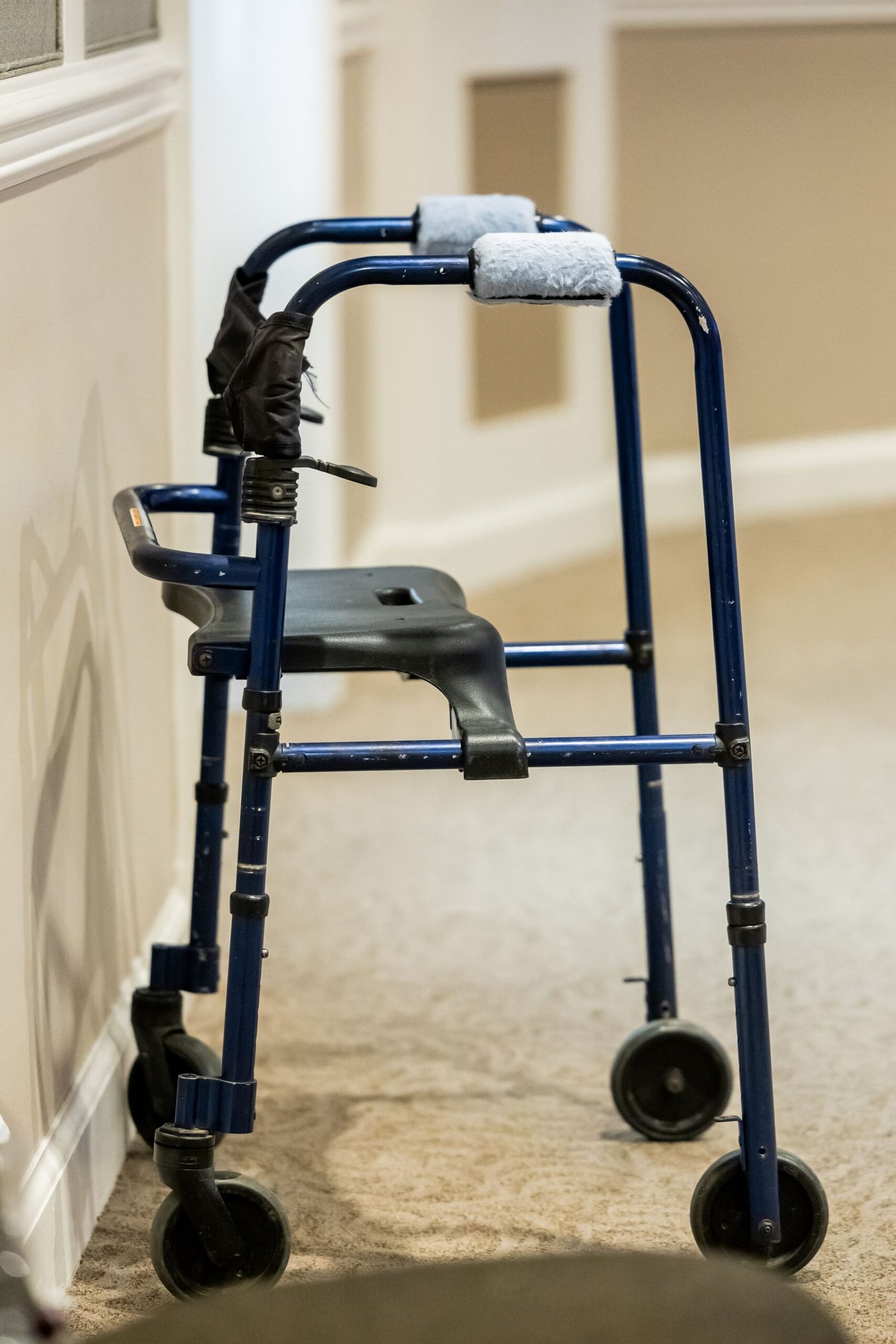
When a Parent Leaves the Hospital With New Mobility Restrictions
A parent who walked independently before hospitalization may leave with a walker, transfer assistance, stair restrictions, or instructions not to put full weight on one leg.
Those changes can alter the discharge destination.
Before leaving the hospital, ask the therapy and medical teams to state the current mobility restrictions in writing, describe the assistance the patient actually needs, and make sure the next setting has the same information.
Medicare’s discharge checklist tells patients and caregivers to discuss whether they can safely manage activities such as bathing, dressing, using the bathroom, and climbing stairs, and to ask about equipment such as a walker. CMS hospital discharge guidance requires planning for a safe transition based on the patient’s post-hospital needs.
Ask for the restriction in exact language
Avoid relying on “needs help walking.”
Ask the therapist or clinician to document:
- whether walking is allowed;
- whether a walker, wheelchair, cane, or another device is prescribed;
- the amount of assistance needed;
- whether stairs are allowed;
- transfer assistance required;
- weight-bearing restrictions if applicable;
- how far the person can currently walk;
- whether fatigue, pain, dizziness, or another issue limits mobility; and
- when the restriction should be reassessed.
The family should not translate clinical shorthand on its own. Ask the treating team to explain it in plain language.
Find out whether the restriction is temporary or open-ended
Ask:
“What needs to happen before this mobility restriction can change?”
The answer might involve healing, a specialist review, therapy progress, imaging, pain control, or another clinical milestone.
Do not assume the restriction expires after a certain number of days unless the treating team says so.
Compare the restriction with the real destination
For a return home, ask whether the person can safely manage:
- entrance steps;
- bedroom access;
- bathroom access;
- toilet and shower transfers;
- the distance from bed to bathroom;
- nighttime trips;
- kitchen access; and
- getting into a vehicle.
For a nursing home, rehab center, or assisted-living setting, ask whether staff can provide the current level of mobility assistance and whether the necessary equipment is ready.
A destination can be generally accessible and still not fit the resident’s specific transfer or assistance needs.
Ask who is allowed to help and how many people are needed
The exact assistance level matters for staffing.
Ask the therapy team to state whether the person currently needs:
- supervision only;
- hands-on assistance;
- one-person assistance;
- two-person assistance;
- mechanical-lift assistance; or
- another defined level of support.
Do not use this article to decide how to transfer someone. The responsible clinicians and therapists should specify and teach the safe technique for that individual.
Confirm the equipment plan
If a walker, wheelchair, commode, hospital bed, or another device is needed, ask:
- Who ordered it?
- Who is supplying it?
- Is it already delivered?
- Does the receiving facility provide it?
- Does the patient have a personal device?
- Who verifies the fit and safe use?
- Who handles repairs or replacement?
Medicare Part B covers certain medically necessary walkers prescribed for use in the home when coverage requirements are met. Coverage rules can differ when the patient is in a Medicare Part A-covered SNF stay.
Ask for caregiver training when the family will assist
If family members will help at home, tell the therapy team exactly who will be providing assistance.
Ask for supervised teaching and a chance to demonstrate understanding before discharge.
Do not agree to a two-person or mechanical-lift plan when only one untrained caregiver will actually be present.
Make sure restrictions travel with the patient
Ask whether the receiving provider has the current:
- therapy evaluation;
- mobility restrictions;
- equipment orders;
- transfer-assistance level;
- fall precautions; and
- follow-up/reassessment plan.
If the restriction changed on the day of discharge, make sure the updated version—not an earlier referral—is sent.
Mobility handoff worksheet
Current device: ____________________
Walking allowed: ____________________
Assistance level: ____________________
Transfer assistance: ____________________
Stairs: ____________________
Weight-bearing restriction: ____________________
Equipment ordered: ____________________
Caregiver trained: Yes / No / N/A
Receiving team confirmed current restriction: Yes / No
Next therapy/clinical reassessment: ____________________
Specialist follow-up: ____________________
If the parent seems stronger than the restriction
Do not independently loosen the restriction because the person appears to be doing better.
Ask the responsible therapist or clinician whether reassessment is appropriate.
Likewise, if the person becomes weaker, more painful, dizzy, or less able to transfer than documented, tell the clinical team promptly. The discharge plan may need to change.
Frequently asked questions
Does needing a walker mean my parent needs a nursing home?
No. A walker alone does not determine the care setting. The overall assistance, safety, medical needs, home environment, and available caregivers matter.
Can assisted living accept someone with mobility restrictions?
Possibly, depending on state rules, community capabilities, staffing, equipment, and the exact assistance needed. Verify the current needs with the community.
Should the family buy equipment before discharge?
Confirm the prescribed device, supplier, coverage, and destination first. Buying the wrong equipment can create unnecessary cost and may not meet the clinical plan.
The practical goal
The next care setting should receive the same mobility picture the hospital is using: current restrictions, assistance level, equipment, training needs, and reassessment plan.
This article provides general information and does not teach transfer or mobility techniques.
Related NHP guides
- Preparing a Parent’s Home for Safe Return After Rehab
- Senior Care After a Hip Fracture: Rehab, Mobility, and Home-Safety Questions
- When a Parent Needs Two-Person Transfer Help: Which Care Setting Fits?
Primary sources checked
- CMS — Hospital Discharge Planning §482.43
- Medicare — Your Discharge Planning Checklist
- Medicare — Walkers
- AHRQ — IDEAL Discharge Planning
*Editorial/source review: October 15, 2026. General educational content; confirm individual medical, Medicare, insurance, equipment, and care-transfer questions with the responsible professionals and organizations.*