
Understanding Senior Care Types and Costs
Understanding Senior Care Types and Costs
Senior care can be confusing because many terms sound similar. Families may hear nursing home, assisted living, memory care, rehab, retirement community, and skilled nursing used in the same conversation, even though each option may serve a different need.
Understanding the main care types can help your family compare communities more clearly and avoid wasting time on options that may not fit your loved one’s situation.
Nursing Homes
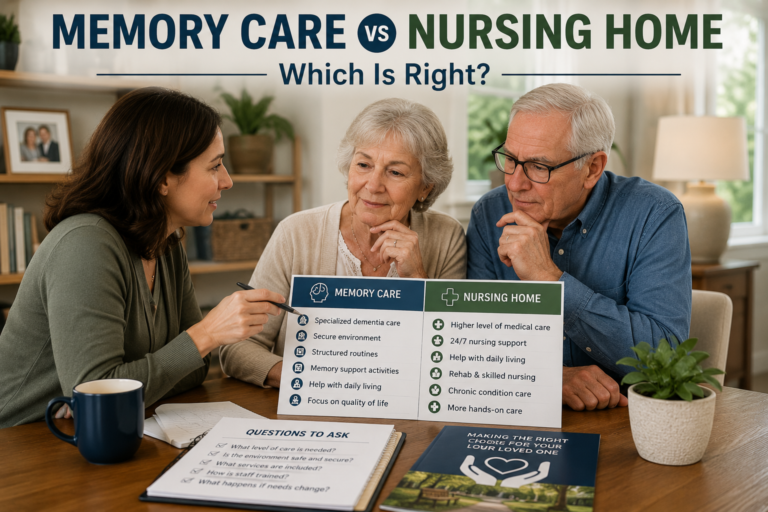
Nursing homes are often used for loved ones who need more daily support, supervision, and help with personal care. Some residents need long-term support because living alone is no longer safe. Others may need a higher level of care due to mobility issues, chronic health needs, or difficulty managing daily activities.
Families often compare nursing homes when a loved one needs consistent support with bathing, dressing, meals, medications, mobility, or supervision.
Assisted Living
Assisted living is generally designed for seniors who need help with daily activities but do not require full-time medical care. This may include help with bathing, dressing, meals, medication reminders, housekeeping, transportation, and social activities.
Assisted living may be a good fit for older adults who want a more supportive setting but still value independence and community.
Memory Care
Memory care is designed for seniors living with Alzheimer’s, dementia, or other memory-related conditions. These communities often provide more supervision, structured routines, secured areas, and staff trained to support residents with memory loss.
Families may begin comparing memory care when a loved one is wandering, becoming increasingly confused, missing medications, forgetting meals, or making unsafe decisions at home.
Rehab & Recovery
Rehab and recovery care is often short-term. It may be needed after surgery, illness, injury, hospitalization, or a sudden health setback. The goal is usually to help someone regain strength, mobility, and function before returning home or moving into another care setting.
Families often consider rehab after a hospital discharge, fall, joint replacement, stroke, or serious illness.
Retirement Communities
Retirement communities are often designed for older adults who want a more independent lifestyle with fewer home responsibilities. They may offer community amenities, social activities, dining options, maintenance-free living, and opportunities to stay active.
This option may be a fit for seniors who do not need significant daily care but want convenience, connection, and a more supportive living environment.
Skilled Nursing
Skilled nursing is generally a higher level of clinical care provided by licensed medical professionals. It may include nursing care, therapy, medication management, wound care, monitoring after hospitalization, or support for more complex health needs.
Skilled nursing may overlap with nursing homes or rehab settings, but the key difference is the level of medical support involved.
Why Senior Care Costs Vary
Senior care costs can vary widely based on location, care type, room type, staffing, services, amenities, and how much support your loved one needs.
For example, a person who needs only light help with daily activities may have very different costs than someone who needs memory care, skilled nursing, medication management, or overnight supervision.
Common factors that may affect cost include:
The type of care needed
The city or state where care is located
Private room versus shared room
Level of personal assistance
Medical or nursing needs
Memory care or secured supervision
Therapy or rehab services
Community amenities and services
Move-in fees or added service fees
Questions to Ask About Costs
Before choosing a community, families should ask clear questions about pricing and what is included.
Helpful questions include:
What is included in the monthly cost?
What services cost extra?
Are there move-in fees or community fees?
How often can pricing change?
What happens if care needs increase?
Is there a different cost for memory care or skilled nursing?
What payment types are accepted?
Can we receive the pricing details in writing?
How to Start Comparing Options
The best starting point is to understand your loved one’s current needs, likely future needs, preferred location, timeline, and budget.
From there, families can compare care types and communities more clearly. A senior who needs social connection and light daily help may not need the same setting as someone who needs secured memory care or skilled nursing support.
Take the Next Step
If you are unsure which type of senior care fits your loved one’s situation, Nursing Home Placement can help you compare nursing homes, assisted living, memory care, rehab and recovery, retirement communities, and skilled nursing options.
You can browse communities by location and care type, or answer a few questions to start narrowing your options. You can also use our Get Help Finding Care form if you need help narrowing down the right option for your family.
This guide is for general informational purposes only and is not medical, legal, or financial advice. Families should speak with the appropriate professionals when making care, health, or payment decisions.