
When Is It Time for Senior Care?
When Is It Time for Senior Care?
Deciding when a parent or loved one may need senior care can be emotional. Many families wait until there is a fall, hospital stay, memory-related safety concern, or sudden change in health before they begin comparing options.
The truth is, there is rarely one perfect moment when the decision becomes easy. Instead, families usually notice a pattern of changes that suggest their loved one may need more support, supervision, or a safer living environment.
Common Signs a Loved One May Need More Support
Senior care may be worth exploring if your loved one is having more trouble with daily life at home. This can include difficulty bathing, dressing, preparing meals, taking medications correctly, keeping the home clean, or getting around safely.
One or two small changes may not mean a move is needed right away. But when several concerns begin happening at the same time, it may be time to compare care options.
Safety Concerns at Home
Safety is one of the biggest reasons families begin looking for senior care. Warning signs may include frequent falls, unexplained bruises, wandering, leaving the stove on, missing medications, or becoming confused about familiar places.
If family members are constantly worried about whether their loved one is safe alone, that is an important sign that more support may be needed.
Changes in Memory or Confusion
Memory changes can become especially stressful for families. Occasional forgetfulness is common, but increasing confusion, wandering, missed medications, repeated questions, or unsafe decisions at home may point to a need for memory care or a higher level of supervision.
Families dealing with Alzheimer’s, dementia, or worsening memory issues should begin comparing options before a crisis happens whenever possible.
Caregiver Burnout
Sometimes the clearest sign is not only what is happening with the older adult, but what is happening with the family caregiver.
If caregiving has become overwhelming, exhausting, or impossible to manage safely, it may be time to consider outside support. Needing help does not mean the family has failed. It often means the care needs have grown beyond what one person can reasonably provide at home.
When to Start Comparing Care Options
It may be time to start comparing senior care options if your loved one needs more help than family can consistently provide, has increasing safety concerns, or may need supervision throughout the day or night.
Starting the search early gives families more time to understand care types, compare communities, ask better questions, and avoid rushed decisions during a hospital discharge or emergency.
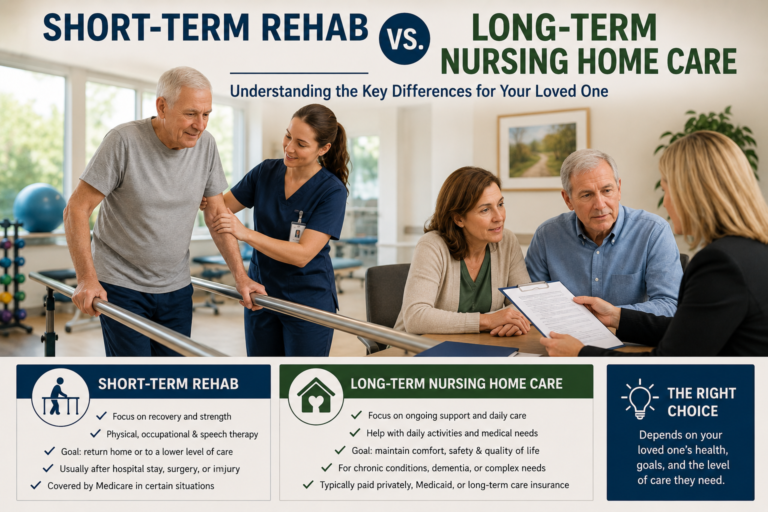
If you are still comparing care types, read our guide on nursing homes vs assisted living to understand the key differences.
Take the Next Step
If you are unsure what kind of care your loved one needs, Nursing Home Placement can help you compare nursing homes, assisted living, memory care, rehab, retirement communities, and skilled nursing options.
You can browse communities by location and care type, or answer a few questions to start narrowing your options.
This guide is for general informational purposes only and is not medical, legal, or financial advice. Families should speak with the appropriate professionals when making care, health, or payment decisions.